Short answer: yes. Hummus has a very low glycemic index of about 6, so it barely moves blood glucose. Two tablespoons carry only about 3g of net carbs, and the tahini and olive oil add healthy fat that slows digestion further. The carbohydrate is not the concern here. The two honest caveats are sodium (store versions can be salty) and what you dip in it, since pita, crackers, and chips are the part of the snack that raises blood sugar.
Hummus nutrition per serving
| Commercial hummus | 2 tbsp (30g) | ¼ cup (60g) |
|---|---|---|
| Calories | 71 | 142 |
| Total carbs | 4.5g | 9g |
| Fiber | 1.7g | 3.3g |
| Net carbs | 2.9g | 5.7g |
| Protein | 2.3g | 4.7g |
| Total fat | 5.3g | 10.7g |
| Glycemic index | 6 (very low) | 6 (very low) |
| Glycemic load | ~0.2 (very low) | ~0.3 (very low) |
| Sodium | 128mg | 256mg |
Source: USDA FoodData Central (hummus, commercial) and the University of Sydney glycemic index database. Net carbs = total carbs minus fiber. Glycemic load = glycemic index times net carbs, divided by 100. Sodium varies by brand; home-made can be far lower.
Is hummus good for diabetes?
It is one of the easier snacks to fit around blood sugar, because everything in it works in the same direction:
- A chickpea base with a low glycemic index. Chickpeas are a legume, and in a randomized trial, adding legumes to a low-glycemic-index diet lowered HbA1c more than a high-fiber wheat diet (Jenkins et al., Arch Intern Med, 2012. PMID: 23089999).
- Fiber and healthy fat that slow digestion. The tahini and olive oil add monounsaturated fat, and higher fiber intake is consistently linked to better glycemic control (Reynolds et al., The Lancet, 2019. PMID: 30638909).
- A very low glycemic index overall. Low-GI foods have been shown to improve HbA1c compared with higher-GI choices (Cochrane review, 2009. PMID: 19160276), and at a GI of about 6, hummus is near the bottom of that scale.
This is why it is a staple of Mediterranean eating patterns, which are widely recommended for blood-sugar and heart health.
Does hummus raise blood sugar?
On its own, very little. Two tablespoons is about 3g of net carbs with a glycemic load near zero, so a normal serving has almost no effect on blood glucose. In most cases the number that matters is not the dip at all, but the dipper.
A pile of pita, crackers, or chips is where the fast carbohydrate comes from, and that is what raises blood sugar. Swap those for raw vegetables such as bell pepper, cucumber, celery, or carrot and the whole snack stays low on the glycemic scale. This is the single most useful habit for keeping hummus friendly to blood sugar.
The best way to eat hummus with diabetes
- Dip vegetables, not refined carbs. Bell pepper, cucumber, celery, and carrot add fiber and almost no fast carbohydrate.
- Mind the sodium, not the carbs. A quarter-cup of store hummus carries roughly 256mg of sodium. Check the label, pick a lower-sodium brand, or make it at home. This matters most if you also manage blood pressure.
- Watch the calories, since it is fat-rich. Hummus is calorie-dense from tahini and olive oil, so a large bowl adds up even though the carbs stay low.
- Use it as a protein-and-fat anchor. A couple of tablespoons alongside vegetables or a lean protein makes a snack that holds you without a blood-sugar spike.
This is general information, not medical advice. Your clinician or dietitian and your own glucose readings come first.
Diabetes-friendly hummus recipes on MedMenu
Every recipe below pairs it with vegetables and shows its full per-serving nutrition analysis in the app. Notice how low the glycemic load runs, and how the numbers shift with what you serve it with. These are four of dozens of hummus recipes and variations in MedMenu.
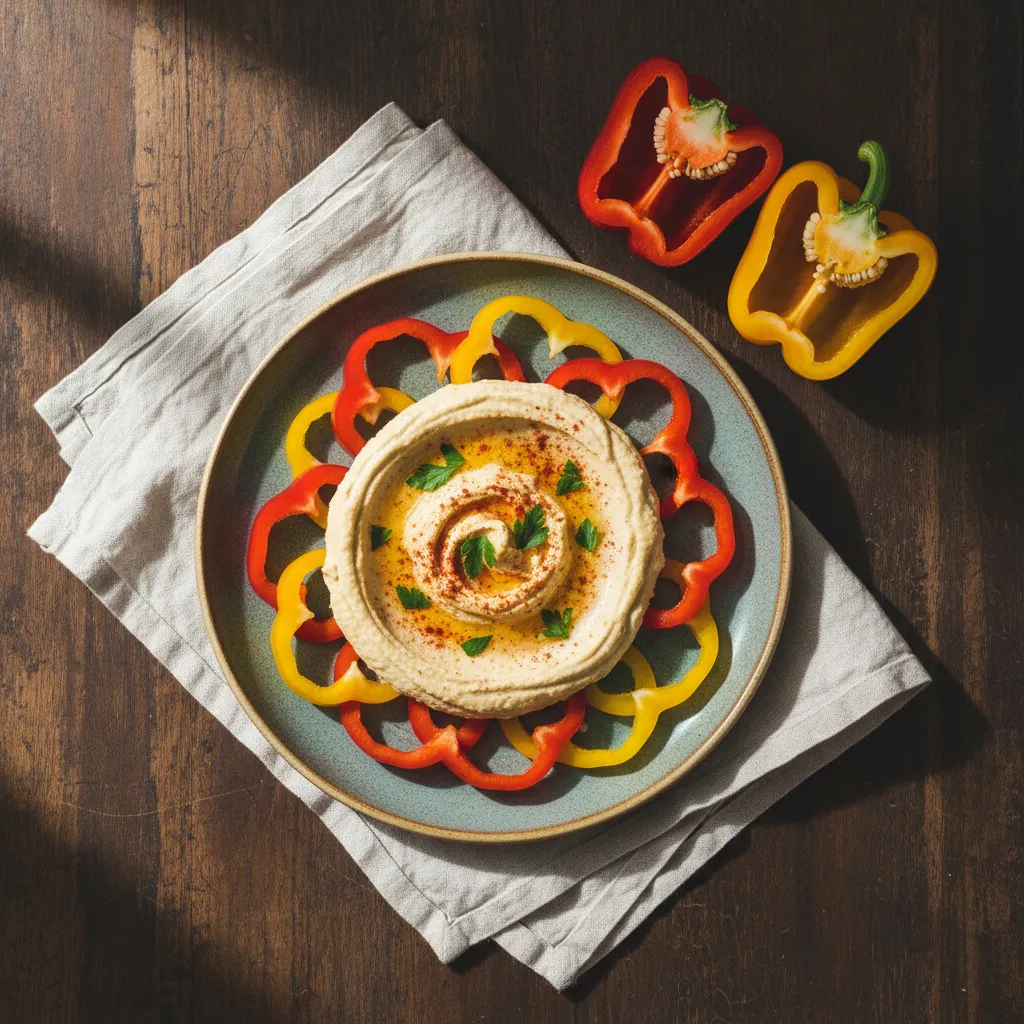
Mediterranean · snack
Bell Pepper Slices with Hummus
133 kcal · 4g fiber · 13g net carbs · GI 8
See full recipe →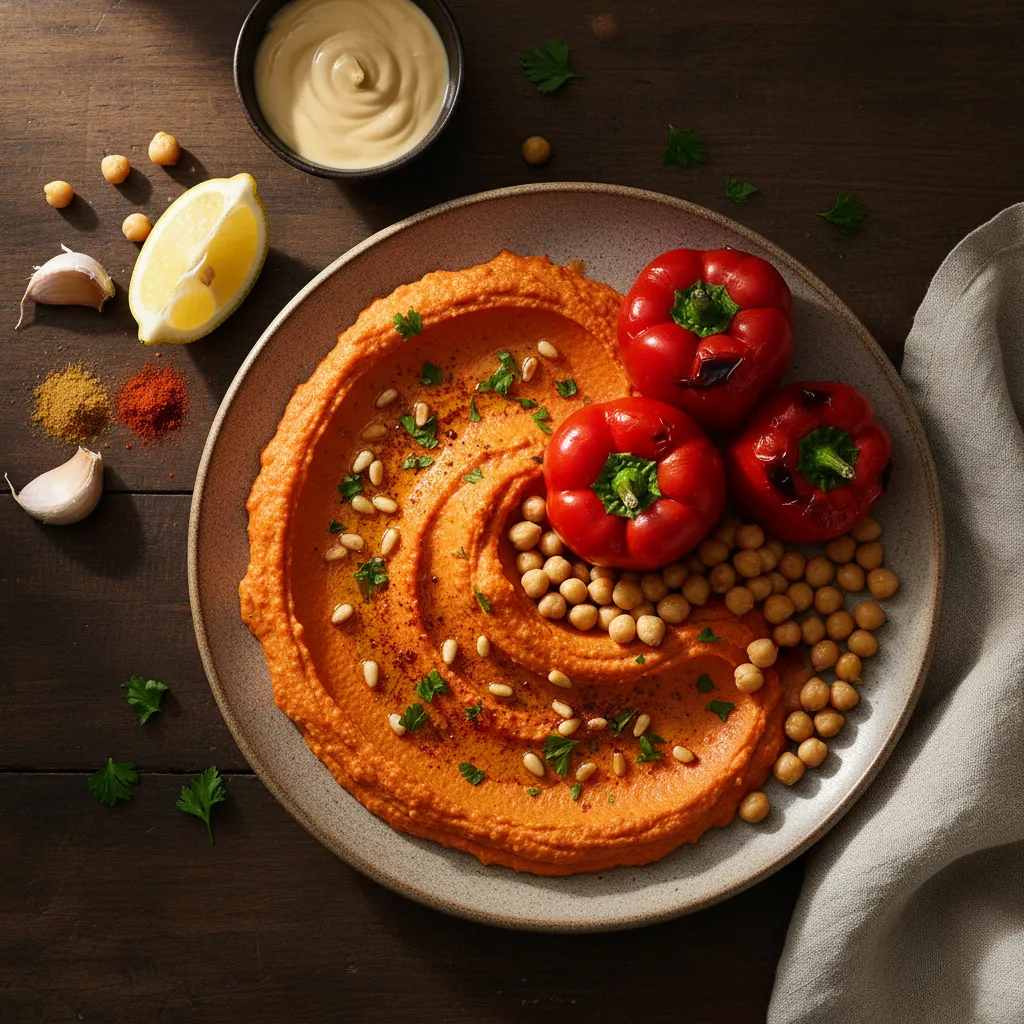
Mediterranean · classic
Roasted Red Pepper Hummus
242 kcal · 6g fiber · 17g net carbs · GI 19
See full recipe →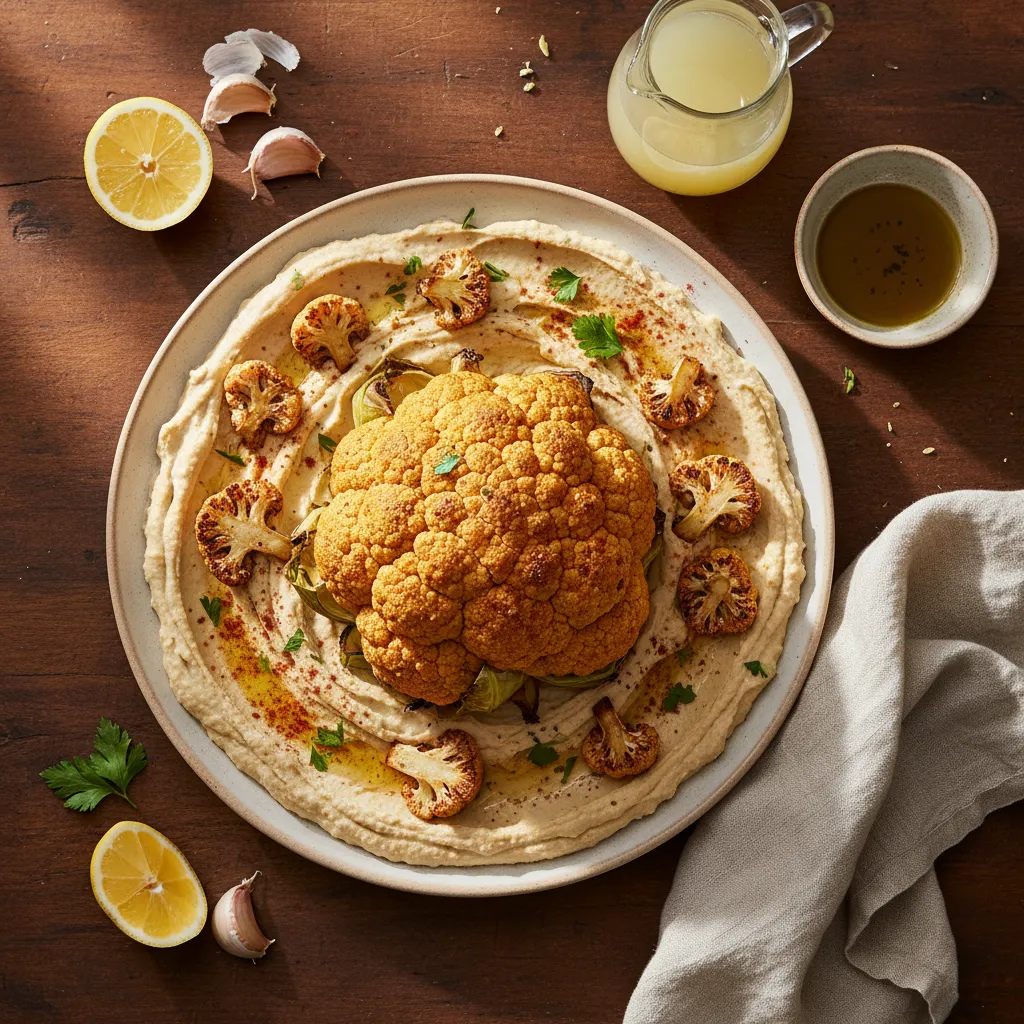
Mediterranean · lower-carb twist
Cauliflower Hummus
202 kcal · 4g fiber · 8g net carbs · GI 10
See full recipe →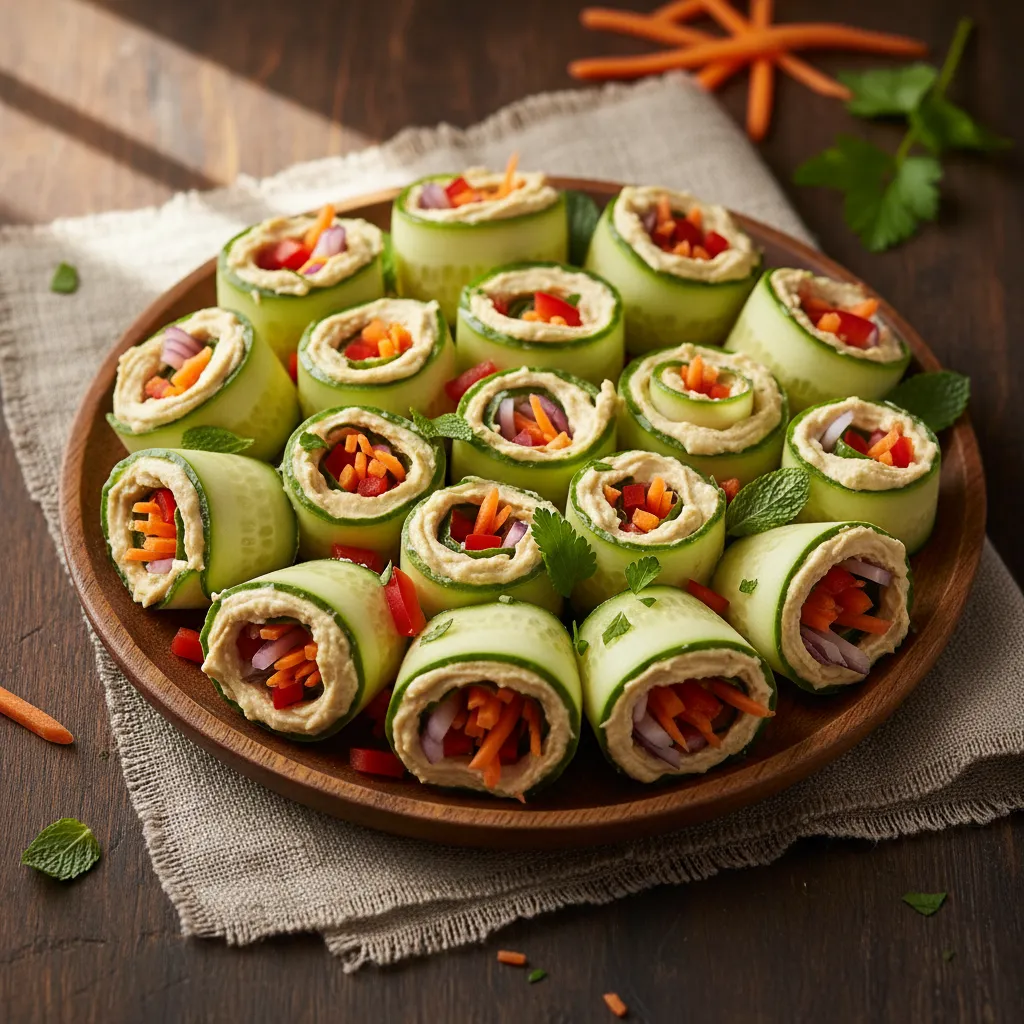
Mediterranean · snack
Cucumber & Hummus Roll-Ups
184 kcal · 5g fiber · 13g net carbs · GI 14
See full recipe →Found a hummus recipe elsewhere?
Paste it into MedMenu and get an instant per-serving breakdown for your conditions.
Check any recipeRelated: Can diabetics eat chickpeas? · Can diabetics eat quinoa? · More diabetes-friendly foods · Mediterranean recipes for diabetes