Short answer: yes, with an eye on portion. Quinoa has a glycemic index of about 53, which sits at the top of the low range, just under the 55 mark where moderate begins. A half-cup of cooked grain carries about 17g of net carbs and a low glycemic load of around 9. A full cup is about 34g of net carbs and a glycemic load near 18, which lands in the medium range. So it is a better grain choice than white rice or bread, but it is not a free food, and the size of the serving is the lever.
Quinoa nutrition per serving
| Cooked quinoa | ½ cup (92g) | 1 cup (185g) |
|---|---|---|
| Calories | 111 | 222 |
| Total carbs | 19.7g | 39.4g |
| Fiber | 2.6g | 5.2g |
| Net carbs | 17.1g | 34.2g |
| Protein | 4.1g | 8.1g |
| Magnesium | 59mg | 118mg |
| Glycemic index | 53 (low-moderate) | 53 (low-moderate) |
| Glycemic load | 9 (low) | 18 (medium) |
| Sodium (unsalted) | 6mg | 13mg |
Source: USDA FoodData Central (quinoa, cooked) and the University of Sydney glycemic index database. Net carbs = total carbs minus fiber. Glycemic load = glycemic index times net carbs, divided by 100.
Is quinoa good for diabetes?
Quinoa earns its place on a diabetes-aware plate, as long as you honor the portion. Three things work in its favor:
- Fiber slows glucose absorption. A cup carries about 5g of fiber. Higher fiber intake is consistently linked to better glycemic control and a lower incidence of type 2 diabetes (Reynolds et al., The Lancet, 2019. PMID: 30638909).
- Complete plant protein. The 8g of protein per cooked cup, together with the fiber, slows digestion and helps with fullness, so the grain does not spike blood sugar the way a refined carbohydrate does.
- Lower glycemic index and load than refined grains. Diets with a lower glycemic index and glycemic load are associated with a lower risk of type 2 diabetes (Barclay et al., Am J Clin Nutr, 2008. PMID: 18326601).
Being honest about where quinoa sits: at a glycemic index of about 53 it is gentler than white rice (around 73) or white bread (around 75), but it is not as low as beans, lentils, or chickpeas, which sit near 28 to 30. Quinoa is a whole grain, not a legume, and its carbohydrate is real.
In a small pilot study, older adults with prediabetes who replaced carbohydrate-rich staples with quinoa and quinoa-based foods showed lower after-meal blood glucose on continuous monitoring (Diaz-Rizzolo et al., Nutrients, 2022. PMID: 35684131). It was a pilot, not proof, but it points the same direction as the wider evidence on whole grains.
Does quinoa raise blood sugar?
Yes, moderately. Quinoa is a carbohydrate, so it will raise blood glucose, and how much depends almost entirely on the portion. This is where glycemic load is more useful than glycemic index alone, because it accounts for both how fast a food raises glucose and how much carbohydrate is on the plate.
A half-cup of cooked quinoa has a low glycemic load of about 9. Double it to a full cup and the glycemic load rises to about 18, which is medium. For comparison, the same carbohydrate amount from white rice or white bread raises blood sugar faster and higher. It is the better swap, but a heaped bowl of it is still a meaningful carbohydrate load.
A practical starting point is a half to one cup of cooked quinoa (about 17 to 34g of net carbs), fitted to the rest of your meal. The ADA is clear that there is no single carbohydrate target for everyone, so your own glucose readings are the best guide (Evert et al., Diabetes Care, 2019. PMID: 31000505).
The best way to eat quinoa with diabetes
- Watch the portion first. A half-cup cooked keeps the glycemic load low. Serve it as part of the plate, not the whole plate.
- Pair it with protein, vegetables, and a little fat. Fish, chicken, tofu, beans, olive oil, or a squeeze of lemon all slow the glucose rise, which is why quinoa bowls and salads behave so gently.
- Swap it in for white rice. Cup for cup, it brings a lower glycemic index plus more fiber and protein, so it is a straightforward upgrade to a rice-based meal.
- Cook it, then cool it. Cooling the cooked grain (in a salad or a next-day bowl) forms some resistant starch, which can blunt the glucose response a little further.
This is general information, not medical advice. Your clinician or dietitian and your own glucose readings come first.
Diabetes-friendly quinoa recipes on MedMenu
Every recipe below is portioned to align with ADA carbohydrate guidance and shows its full per-serving nutrition analysis in the app. Notice the recipe glycemic index runs lower than the grain's 53 on its own: that is because each dish pairs it with vegetables, protein, and healthy fat that slow digestion. These are four of more than a hundred quinoa dishes across cuisines in MedMenu.
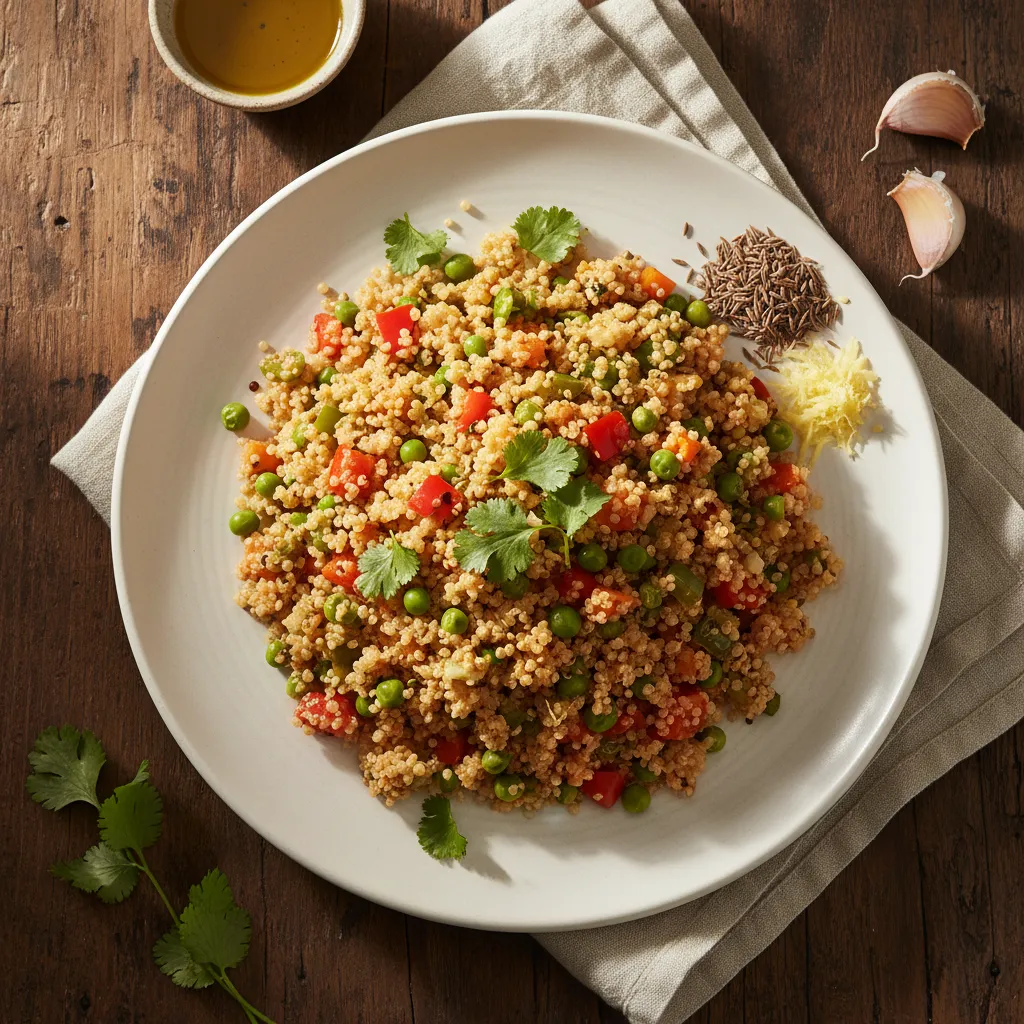
Indian
Quinoa Pulao with Mixed Vegetables
225 kcal · 5g fiber · 29g net carbs · GI 44
See full recipe →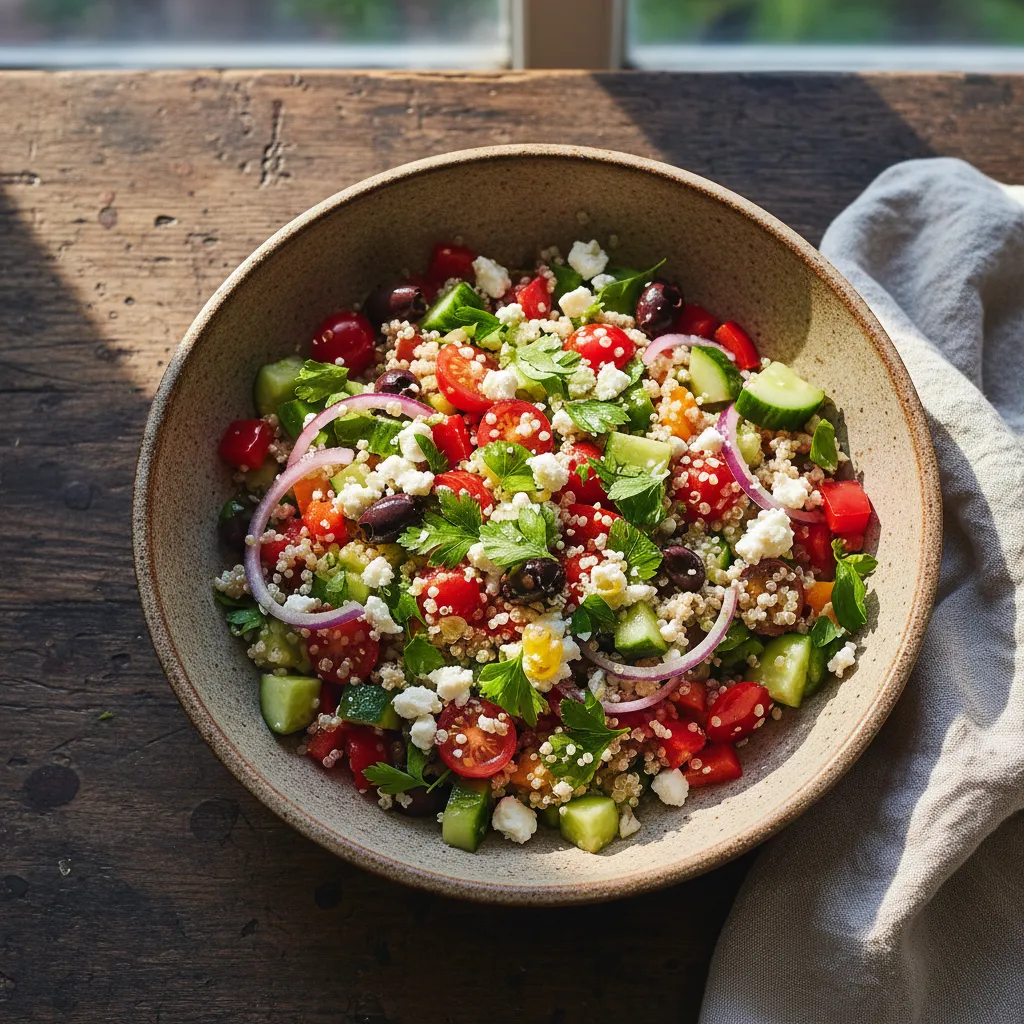
Mediterranean
Mediterranean Quinoa Salad
303 kcal · 4g fiber · 29g net carbs · GI 36
See full recipe →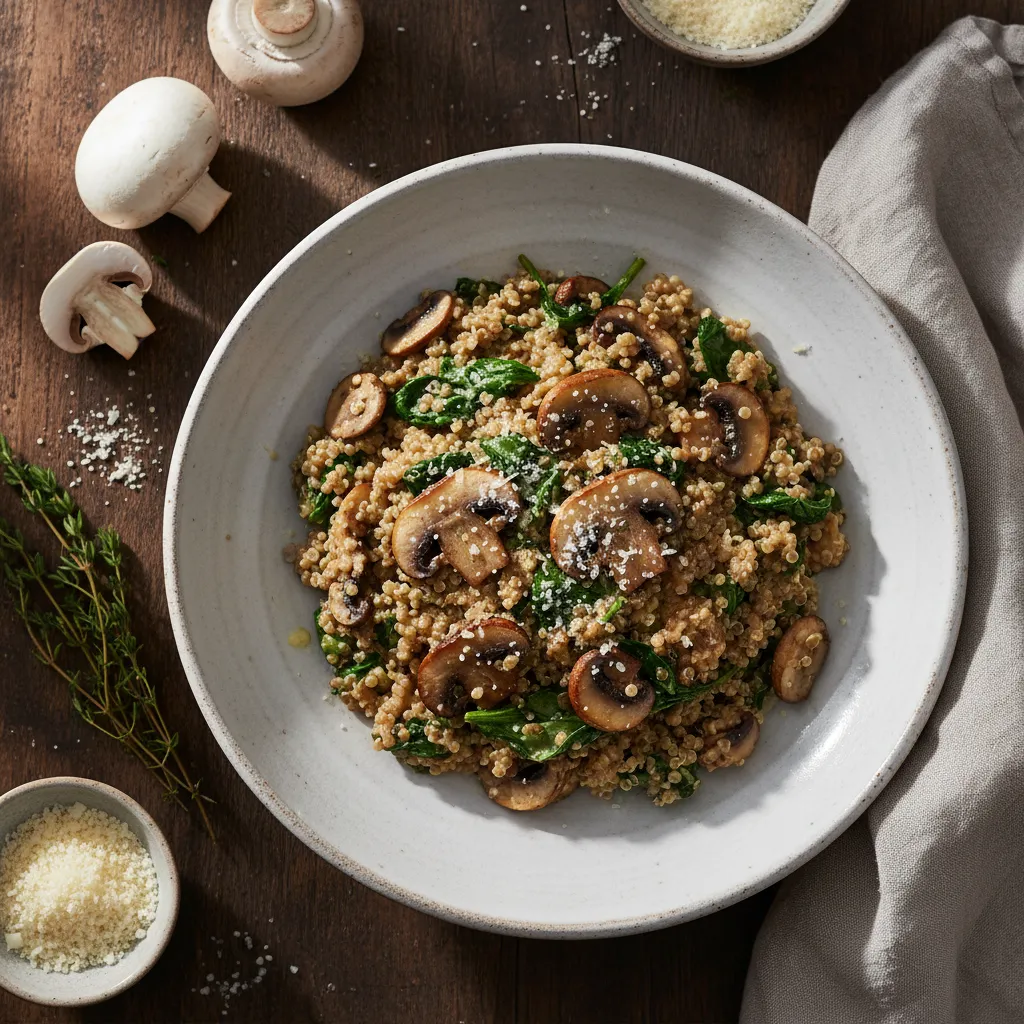
Italian
Mushroom & Spinach Quinoa Risotto
241 kcal · 4g fiber · 32g net carbs · GI 34
See full recipe →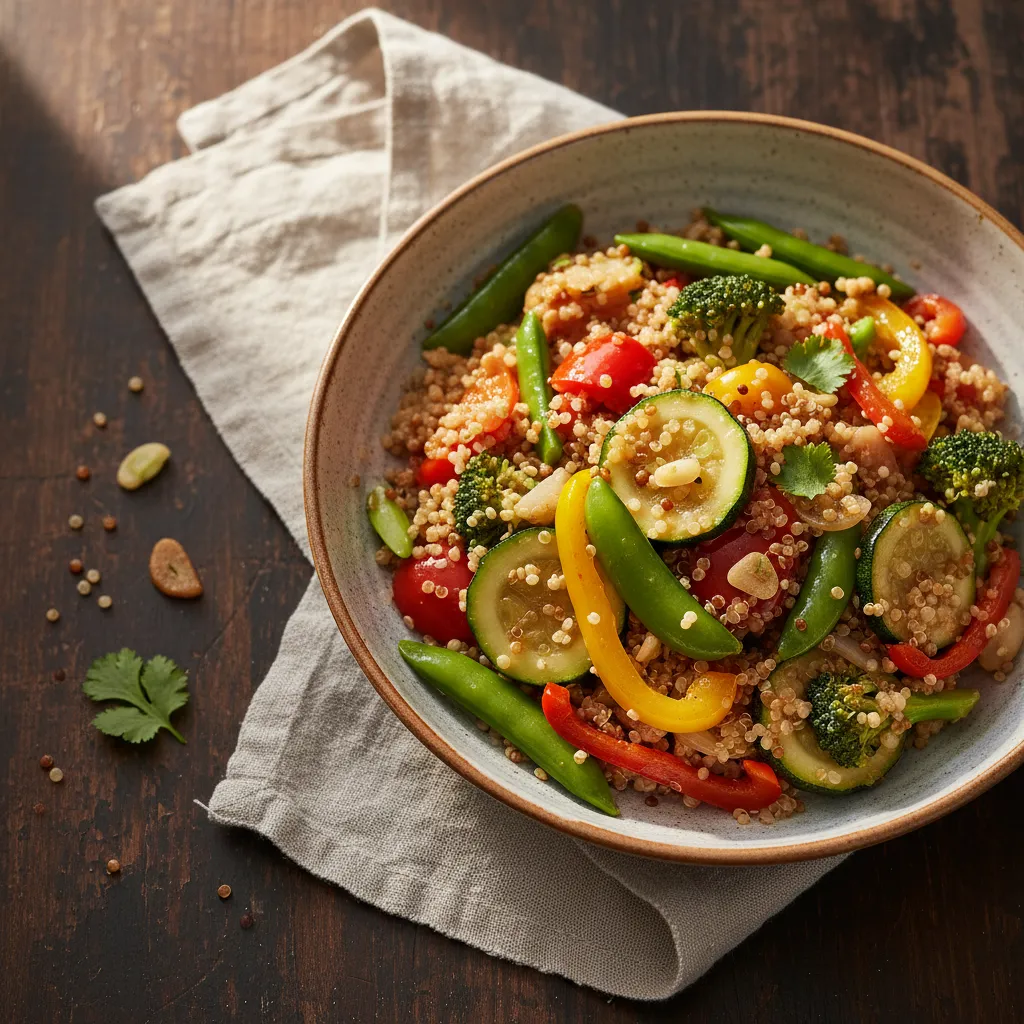
Chinese
Quinoa & Vegetable Stir-Fry
286 kcal · 6g fiber · 33g net carbs · GI 37
See full recipe →Found a quinoa recipe elsewhere?
Paste it into MedMenu and get an instant per-serving breakdown for your conditions.
Check any recipeRelated: Can diabetics eat chickpeas? · Can diabetics eat hummus? · Can diabetics eat lentils? · More diabetes-friendly foods · Mediterranean recipes for diabetes