One dinner. Everyone at the table. Nobody on a special plate.
If you're cooking for someone you love who lives with diabetes, high blood pressure, heart disease or kidney disease, you've probably wondered how to make one meal that works for all of them, and still tastes like Thanksgiving. This book has done that work for you: 12 classic dishes made the lighter way, and a plate for every guest, checked against the published guidelines for each condition.
✓One menu, every guest. Turkey, stuffing, gravy, mash, green bean casserole, cranberry sauce, rolls, two desserts. Everyone eats the same food; only the portions change.
✓The plates are worked out for you. Find your guest on one chart, turn to their page, and the plate is there, down to the spoonful. For kidney disease and dialysis, the plates are set out by body weight, from 99 to 220 pounds.
✓Lighter where it counts, still the holiday. A full plate of every dish in this book carries about 670 milligrams of sodium. The same plate made from traditional recipes carries about 2,862.
✓A plan for the two weeks before. A countdown from two weeks out, one shopping list for the whole menu, and a timeline for Thursday so dinner lands on time.
✓The awkward parts too. Gentle ways to ask a guest about their diet, what to do about seconds, buffet labels, and what to say when a relative wants to bring a dish.
What's inside
13 recipes: 12 Thanksgiving dishes and a salt-free herb blend, each with make-ahead notes and a short "why this version is kinder."
The "Find your guest" chart: four doors (no kidney disease; kidney disease stages 1 to 2; stages 3 to 5, with or without diabetes; dialysis), each leading to plates that fit every condition your guest lives with.
Plates for every guest: for guests without kidney disease, the classic plate and three easy trades (no sweet tooth, love dessert, love the sides); for kidney disease and dialysis, two plates by body weight; and an honest look at seconds.
The game plan: countdown, shopping list and Thursday timeline.
"You might be wondering": answers to the questions hosts ask, plus buffet labels and a guest list to print.
A leftovers weekend: four recipes for Friday to Sunday, each with the turkey portion that fits.
One month of MedMenu Pro, free, with your purchase.
A PDF in two editions: one sized for your phone, one to print at home (107 pages).
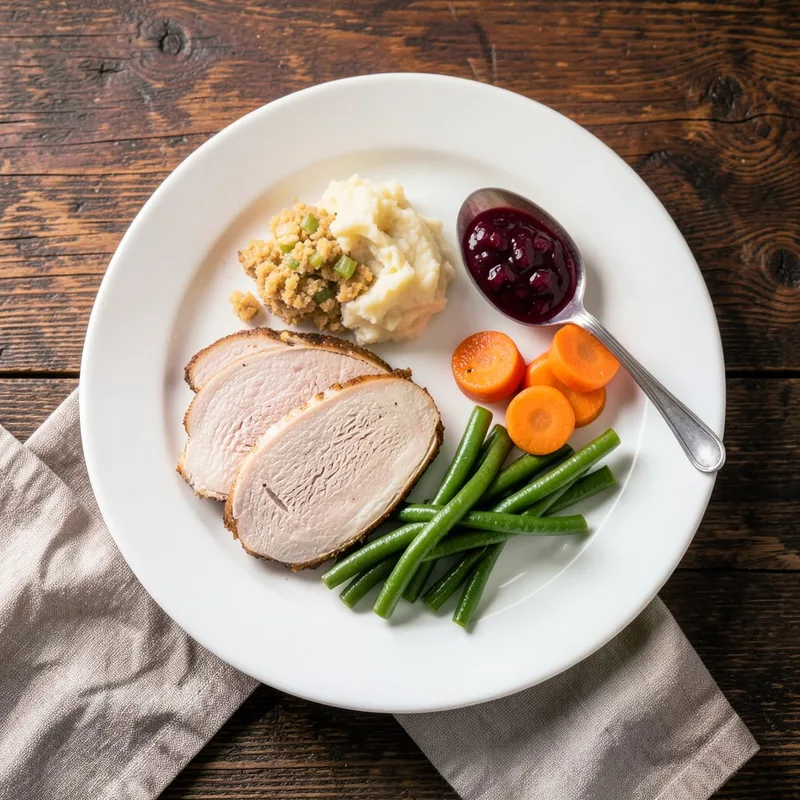
A plate from the book
For a guest with no kidney disease, whether they live with diabetes, high blood pressure, heart disease or all three, the classic plate looks like this:
3 ounces of herb-roasted turkey
1/4 cup of apple, celery and herb stuffing
1/3 cup of potato and cauliflower mash
2 tablespoons of pan gravy
2 tablespoons of cranberry-orange sauce
a sliver of pumpkin pie
That plate comes to about 252 milligrams of sodium and 31 grams of net carbohydrate, inside the one-meal lines for all three conditions at once. Every other guest's plate is in the book.
You might be wondering
Can one Thanksgiving menu work for diabetes, heart disease and kidney disease?
Yes. Every dish in this book was built to fit all of them, and only the portions change from guest to guest. A guest with no kidney disease gets one plate that fits diabetes, high blood pressure and heart disease together. Kidney disease and dialysis get their own plates by weight, and each of those fits the other conditions too.
How do I make low sodium Thanksgiving recipes that don't taste bland?
Start from scratch, and let herbs, garlic, lemon and the turkey's own pan juices do the work. Most of the salt in a traditional Thanksgiving hides in places you'd never taste it: the butter-and-salt rub on the turkey, the canned soup in the green bean casserole, the bottled dressing on the salad. Our stuffing, for example, has about 149 milligrams of sodium per half cup, against about 881 in a traditional recipe.
What does a heart healthy Thanksgiving menu look like?
It looks like the usual menu, with olive and canola oil in place of most of the butter and far less salt. In this book, a full plate of every dish carries about 13.5 grams of saturated fat, against about 43.5 grams for the same plate made the traditional way. That full plate is still more than one meal for a guest with heart disease, which is why the book portions a plate for them: the classic plate above stays under the 4.5-gram line for saturated fat.
Is a full plate of everything still too much?
Often, yes, and the book says so plainly. Even made the lighter way, one helping of every dish adds up to more than one meal's worth of sodium, carbohydrate or saturated fat for these guests. That's why each guest has a plate, with portions that fit, and a "Seconds" page that shows what a second helping adds up to.
Are the recipes checked against medical guidelines?
Every recipe and every plate has been checked against published guidelines: the American Diabetes Association's Standards of Care for diabetes; the American Heart Association's dietary guidance and the National Heart, Lung, and Blood Institute's DASH eating plan for high blood pressure and heart disease; and, for kidney disease, the KDIGO 2024 guideline, the KDOQI 2020 nutrition guideline and the National Kidney Foundation. Nutrition is computed from USDA data for every ingredient.
What do I get for $9.99, and what's free?
The book is $9.99 and comes as a PDF you can download right away, in two editions (phone and print), with one month of MedMenu Pro, free. The free sampler has the menu at a glance, the salt-substitute answer and three recipes from the book: the herb-roasted turkey, the cranberry-orange sauce and the apple-cranberry crisp.
Get Thanksgiving Without the Second-Guessing
A PDF you can download right away, in two editions (phone and print), $9.99 one-time, with one month of MedMenu Pro, free.
Get the free sampler
A first look at the book, as a PDF for your phone or to print. Enter your email for the download. No account or password.
We'll also email you new recipes and guides from MedMenu. Unsubscribe anytime. Privacy policy
General information based on published guidelines. Your care team sets personal targets.