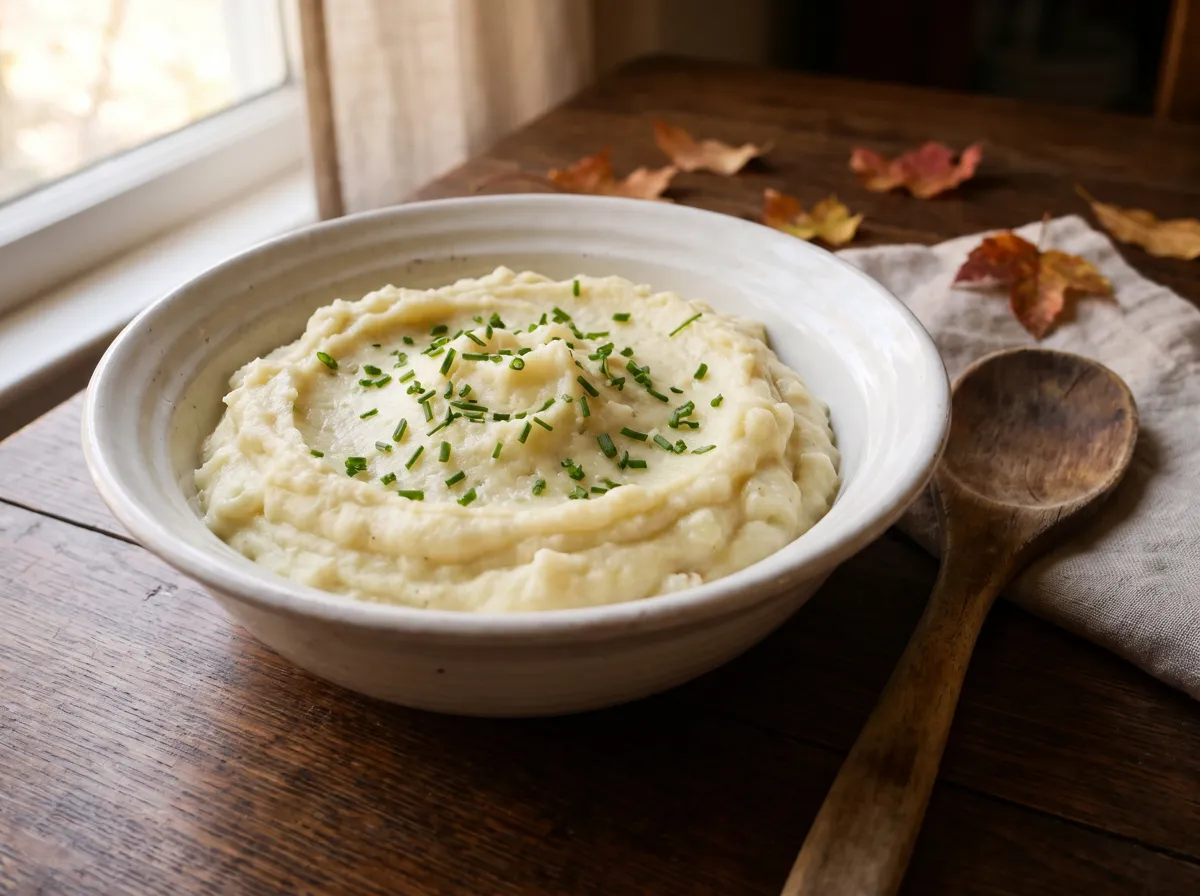
Half-and-half potato and cauliflower mash recipe
Serves 9 to 10 (1/2 cup each) · 20 minutes to prepare, plus an overnight soak · 35 minutes to cook
Ingredients
- 1 lb 2 oz russet or Yukon Gold potatoes, peeled and cut into 3/4-inch (2 cm) dice
- 1 medium head cauliflower, cut in florets
- 3/4 cup 1% milk, warmed
- 2 tablespoons olive oil
- 1 tablespoon unsalted butter
- 1/4 teaspoon white pepper
- 2 tablespoons chopped fresh chives
Method
- Peel the potatoes and drop them into cold water so they don't darken. Cut them into 3/4-inch (2 cm) dice.
- The night before: bring 6 1/2 cups of unsalted water to a boil, add the potatoes and boil 8 minutes.
- Drain and throw the water away. It holds the potassium that cooked out, so it's not one to save for gravy or stock.
- Put the potatoes in a bowl with 6 1/2 cups of fresh cold water. Cover and refrigerate for 12 hours, or overnight.
- On the day, drain the potatoes, cover them with fresh unsalted water and simmer until completely soft. Drain well and let them steam dry in the colander for 2 minutes.
- While the potatoes cook, boil the cauliflower in a separate pot of water 12 to 15 minutes until very soft. Drain well and press out the water.
- Mash the potatoes and cauliflower together, then stir in the warm milk, olive oil, butter and white pepper until smooth. Top with chives.
Make ahead
- Start the potatoes the night before: dice, boil 8 minutes, drain, then soak them in fresh water in the fridge overnight.
- Mash up to 2 days ahead, refrigerate, and reheat covered in a 350°F oven or a slow cooker on low with a splash of warm milk.
- Squeeze the cooked cauliflower in a clean towel so the mash does not turn watery when reheated.
Nutrition in 1/2 cup
- Calories: 103
- Sodium: 20 mg
- Carbohydrate: 14 g
- Net carbs: 11.8 g
- Fiber: 2.2 g
- Added sugar: 0 g
- Saturated fat: 1.3 g
- Protein: 2.6 g
- Potassium: 177 mg
- Phosphorus: 58 mg
The potassium is counted at the upper value reported for this boil-and-soak method by Martínez-Pineda and colleagues, Journal of Renal Nutrition, 2020.
This mash and classic mashed potatoes, 1/2 cup each
| 1/2 cup | This mash | Classic mash |
|---|---|---|
| Sodium | 20 mg | 202 mg |
| Potassium | 177 mg | 390 mg |
| Net carbs | 11.8 g | 21.2 g |
| Saturated fat | 1.3 g | 3.8 g |
The classic is mashed potatoes from a major test kitchen, made with 1/4 cup of butter and 1/2 teaspoon of salt.
For comparison, the per-meal limits the book works from include 500 milligrams of sodium for high blood pressure and 45 grams of net carbohydrate for diabetes, for the whole plate.
How do you make mashed potatoes without salt?
Cook the potatoes in unsalted water and get the flavor from warm milk, olive oil, a little unsalted butter, white pepper and fresh chives. Classic mashed potatoes from a major test kitchen use 1/2 teaspoon of salt and 1/4 cup of butter.
Does soaking potatoes lower the potassium?
It lowers it, but does not remove all of it. The National Kidney Foundation says leaching pulls some, but not all, of the potassium out of a vegetable. The potassium in this recipe's numbers is the upper value reported for this boil-and-soak method in a published kidney-nutrition study (Journal of Renal Nutrition, 2020).
Why add cauliflower to mashed potatoes?
Cauliflower keeps the mash creamy with less starch. Half a cup of this mash has about 11.8 grams of net carbohydrate, against about 21.2 grams in classic mashed potatoes, so the spoonful for a guest with diabetes can be bigger.
From the book
This recipe is from Thanksgiving Without the Second-Guessing, a cookbook with the full Thanksgiving menu and a plate worked out for each guest with diabetes, high blood pressure, heart disease or kidney disease. The free sampler has the menu and one full recipe, the potato and cauliflower mash.
Sources
- · National Kidney Foundation, Potassium in Your CKD Diet (leaching)
- · Martínez-Pineda and colleagues, Journal of Renal Nutrition, 2020 (potassium after boiling and soaking)
- · Nutrition figures computed from USDA FoodData Central ingredient data, for both this recipe and the classic comparison recipe