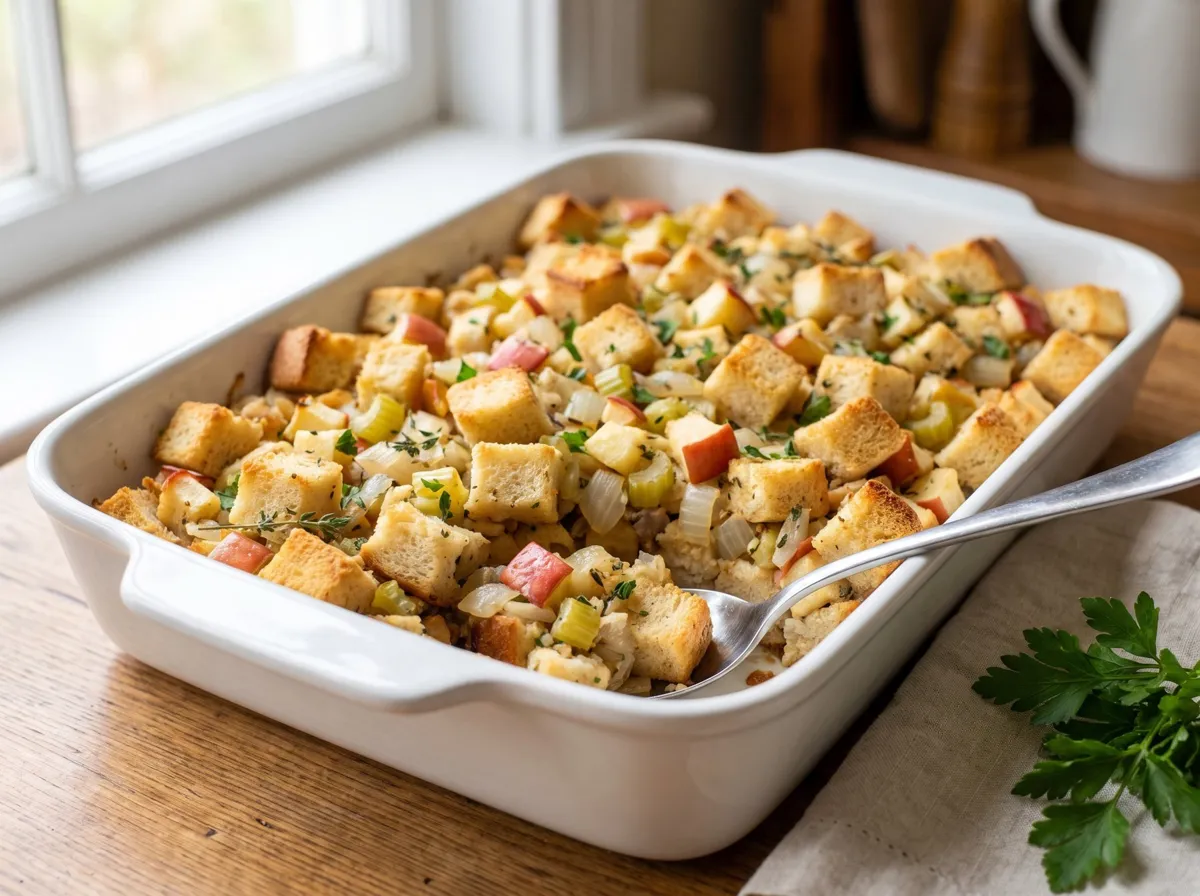
Apple, celery and herb bread stuffing recipe
Serves 13 (1/2 cup each) · 25 minutes to prepare · 45 minutes to cook
Ingredients
- 10 oz white sandwich bread, cut in 3/4-inch cubes (about 8 cups)
- 1 tablespoon unsalted butter
- 3 tablespoons olive oil
- 3 cups chopped celery, about 6 medium stalks
- 1 1/2 cups chopped onion
- 1 large apple, cored and diced, skin on
- 3 cloves garlic, minced
- 1/4 cup chopped fresh parsley
- 1 tablespoon fresh thyme leaves
- 1 1/2 teaspoons dried rubbed sage
- 1/2 teaspoon ground black pepper
- 2 large eggs
- 2 cups unsalted chicken or turkey stock
Method
- Heat the oven to 325°F. Spread the bread cubes on two sheet pans and bake 15 to 20 minutes, stirring once, until dry and lightly crisp. Let cool.
- Melt the butter with the olive oil in a large skillet over medium heat. Add the celery and onion and cook 8 to 10 minutes until soft. Add the apple, garlic, parsley, thyme, sage and pepper and cook 2 minutes more.
- In a very large bowl, whisk the eggs with the stock. Add the bread and the vegetables and fold until the bread has soaked up the liquid.
- Spread in a buttered 9 x 13-inch baking dish. Raise the oven to 375°F. Cover with foil and bake 20 minutes, then uncover and bake 20 to 25 minutes more until the top is golden and the center reads 165°F.
Make ahead
- Dry the bread cubes up to 3 days ahead and keep them in a sealed bag at room temperature.
- Cook the vegetables up to 2 days ahead and refrigerate.
- You could assemble the whole dish the night before, cover and refrigerate, then add 10 minutes to the covered baking time.
- Some store-bought unsalted or salt-free broths get their flavor from potassium chloride. If anyone at the table limits potassium, check the ingredient list, or use homemade stock from the turkey neck.
Nutrition in 1/2 cup
- Calories: 130
- Sodium: 149 mg
- Carbohydrate: 16 g
- Net carbs: 14.3 g
- Fiber: 1.7 g
- Added sugar: 0.9 g
- Saturated fat: 1.5 g
- Protein: 4.2 g
- Potassium: 185 mg
- Phosphorus: 63 mg
This stuffing and a classic stuffing, 1/2 cup each
| 1/2 cup | This stuffing | Classic stuffing |
|---|---|---|
| Sodium | 149 mg | 881 mg |
| Saturated fat | 1.5 g | 14.8 g |
| Added sugar | 0.9 g | 2.7 g |
| Net carbs | 14.3 g | 30.1 g |
The classic is a traditional bread stuffing from a major test kitchen.
For comparison, the per-meal sodium limits the book works from are 500 milligrams for high blood pressure, 667 for kidney disease, 750 for heart disease and 767 on dialysis. On the book's plates for guests without kidney disease, the stuffing is a 1/4 cup, which has about 75 milligrams of sodium.
Where does the salt in stuffing come from?
In a classic stuffing, most of the salt and fat comes from a lot of salted butter and a spoonful of salt. The classic recipe compared here uses 3/4 cup of butter and 1 teaspoon of salt. This stuffing uses 1 tablespoon of unsalted butter, olive oil, unsalted stock and no added salt.
Can stuffing be cooked inside the turkey?
It can, but the center of the stuffing has to reach 165°F, the same as the turkey. This recipe bakes the stuffing in a dish instead, which keeps the turkey's roasting time shorter and lets you check the stuffing's temperature on its own.
Can I make stuffing the day before?
Yes. You could assemble the whole dish the night before, cover and refrigerate it, then add 10 minutes to the covered baking time. The bread cubes can be dried up to 3 days ahead, and the vegetables cooked up to 2 days ahead.
From the book
This recipe is from Thanksgiving Without the Second-Guessing, a cookbook with the full Thanksgiving menu and a plate worked out for each guest with diabetes, high blood pressure, heart disease or kidney disease. The free sampler has the menu and one full recipe, the potato and cauliflower mash.
Sources
- · USDA FSIS, Let's Talk Turkey (stuffing temperature)
- · Nutrition figures computed from USDA FoodData Central ingredient data, for both this recipe and the classic comparison recipe