Foods to avoid with kidney disease / Oatmeal
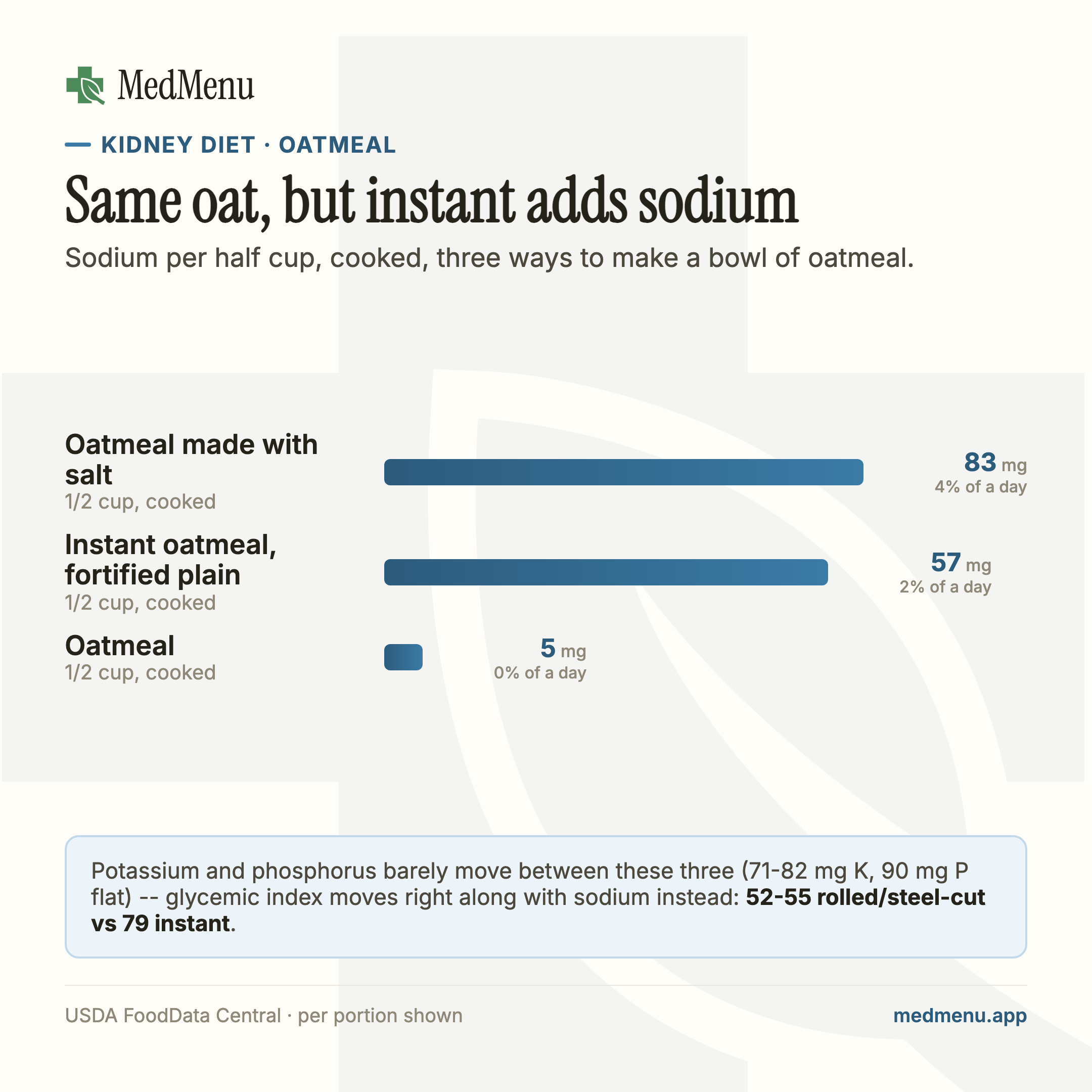
Oatmeal's potassium and phosphorus barely move no matter how you make it. A half cup, cooked, is about 82 mg potassium and 90 mg phosphorus whether it's plain, an unflavored instant packet, or cooked with a pinch of salt. What actually moves is sodium: 5 mg plain and unsalted, up to 83 mg once salt enters the picture, a roughly 16-fold range that has nothing to do with the oat and everything to do with how it was prepared. Glycemic index moves the same way, from 52 (steel-cut) to 79 (instant), a 27-point spread from processing alone.
By the MedMenu Editorial Team · Published August 19, 2026
Per USDA FoodData Central, a half cup of cooked oatmeal reads almost identically across three real preparations:
| Preparation | Potassium | Phosphorus | Sodium |
|---|---|---|---|
| Oatmeal, no salt added, 1/2 cup, cooked (117 g) | 82 mg | 90 mg | 5 mg |
| Instant oatmeal, fortified plain, 1/2 cup, cooked (117 g) | 71 mg | 90 mg | 57 mg |
| Oatmeal made with salt, 1/2 cup, cooked (117 g) | 82 mg | 90 mg | 83 mg |
Phosphorus is identical across all three, 90 mg. Potassium barely moves, 71-82 mg. Sodium is the outlier: the plain instant packet (unflavored, no added sugar) carries over 11 times the sodium of plain oats cooked without salt, and salting your own pot lands even higher. It's a modest number either way, one packet's worth of fortification. The pattern is what's worth knowing before you assume "oatmeal" means one number.
Because that line holds for some oats and misses for others, and the difference comes entirely from how the same grain is cut and processed. Ranked by glycemic index, low to high (Atkinson and colleagues, 2008):
The same processing step that gets instant oats ready in a minute also breaks the oat down enough to digest faster, which is what raises its glycemic index. That processing happens on the packaging line, well apart from the mineral content, which is why the potassium and phosphorus table above barely moves between rolled-style oatmeal and the instant version while the sodium and glycemic index both climb.
Managing kidney disease by itself, any plain oatmeal fits comfortably: even the highest sodium number on the table above, 83 mg for a home-salted bowl, is a small share of a day's target. The preparation choice matters more once diabetes is also part of the picture.
A simple version: steel-cut oats cooked in plain water, a portion of berries stirred in, and a spoon of nut butter, is a bowl that holds the minerals flat and keeps blood sugar gentler than the instant packet would.
Potassium, phosphorus, sodium, and carbohydrate come from USDA FoodData Central (Standard Reference legacy): oats, regular and quick, unenriched, cooked without salt; oats, instant, fortified, plain, prepared with water; and oats, regular/quick/instant, unenriched, cooked with salt. Glycemic index figures for rolled, steel-cut, and instant oats are cross-checked against published international tables (see Sources); they are averages from testing in people, so treat them as a ranking rather than a promise about your own glucose. No milligram figure is printed here for steel-cut oats specifically, since USDA's Standard Reference database does not carry a separate steel-cut entry; its glycemic index is cited on its own, and the mineral comparison above uses the two preparations that are directly audited. For scale, many kidney diets use around 2,000 mg potassium and 1,000 mg phosphorus a day as common reference points, so even the highest sodium number on the table above, an 83 mg home-salted bowl, is a small share of a day's typical 2,300 mg sodium target. There is no single potassium, phosphorus, or sodium limit that fits everyone; your care team sets yours from your blood test results and CKD stage.
Sources
MedMenu is an information tool, not medical advice, and does not diagnose, treat, or manage any condition. Your nephrologist and renal dietitian set your personal targets from your labs and stage. Published August 19, 2026 · Last updated August 19, 2026.
This is a comprehensive website! Recipes look great and represent a variety of cuisines. You have emphasized the appropriate nutrients. Guidance tips are helpful. Science tab provides evidence-based references and are appropriate for the diseases addressed. Links to Drugs.com, WebMD & Medline are nice. As a registered dietitian, I feel comfortable recommending MedMenu.
Susan G. Rodder, MS, RDN, LD
Registered Dietitian
MedMenu offers all the data you need to plan meals based on specific dietary needs. There are lot of great recipes from a variety of cuisines to choose from, or you can test your own recipe to see how well it fits into your dietary guidelines.
Valerie B.
MedMenu user
Diabetically Speaking with SmartMove360
Not on minerals. A half cup of cooked oatmeal is about 82 mg potassium and 90 mg phosphorus, and that barely changes whether it's plain, instant, or salted. What does change is sodium: 5 mg plain and unsalted, 57 mg for a plain instant packet, up to 83 mg if you salt the pot yourself.
Not on potassium or phosphorus, which stay close to regular oatmeal even in the fortified instant version. It is worse on two other numbers: sodium (57 mg against 5 mg for plain, unsalted oats) and glycemic index (79 against 55), both from how instant oats are processed, independent of any added mineral.
Plain rolled or steel-cut oats, cooked without added salt, skip the flavored instant packets, and check the label on any instant variety for added sodium and sugar. Steel-cut oats score lowest on the glycemic index (52), just under rolled oats (55), both far under instant (79).
Rather not count?
A printable week with the potassium, phosphorus and sodium worked out for every meal, so the portions are handled for you.
See the meal plan →