Foods to avoid with kidney disease / Rice
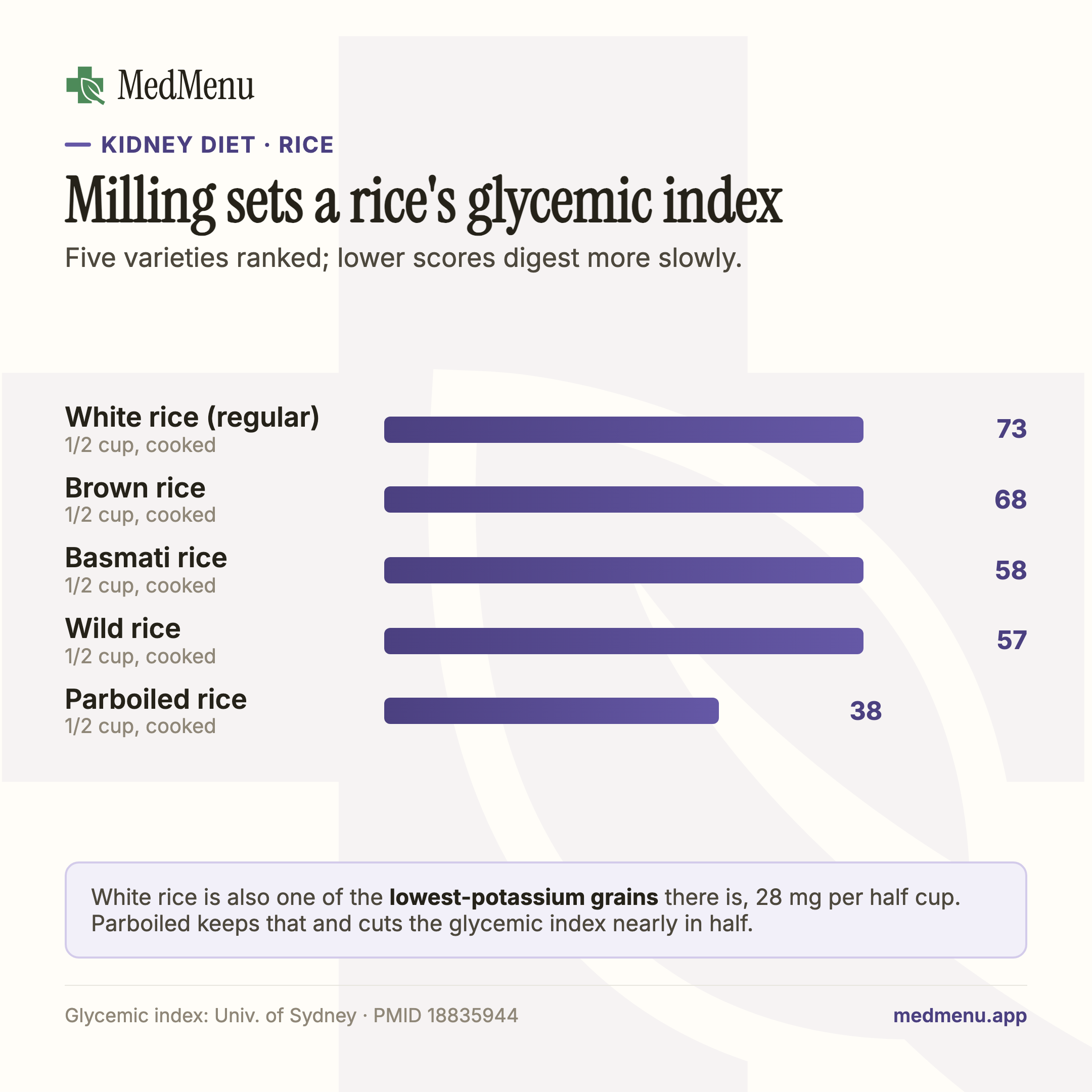
Yes, and white rice is one of the lowest-potassium grains there is. A half cup, cooked, is about 28 mg potassium and 34 mg phosphorus, a fraction of what oatmeal or whole-wheat bread carries. Milling rice down to that low-mineral profile also strips it to almost pure starch, and pure starch scores 73 on the glycemic index, among the highest of any grain. Switching to brown rice barely helps (68). Parboiled rice keeps nearly the same low minerals but cuts the glycemic index to 38, roughly half.
By the MedMenu Editorial Team · Published August 11, 2026
Rice is one of the few starches that stays genuinely low on both minerals at once. Per USDA FoodData Central:
| Portion | Potassium | Phosphorus | Carb |
|---|---|---|---|
| White rice, 1/2 cup, cooked (79 g) | 28 mg | 34 mg | 22 g |
| Parboiled (converted) rice, 1/2 cup, cooked (79 g) | 44 mg | 43 mg | 21 g |
| Rice cakes, 2 cakes (18 g) | 52 mg | 65 mg | 15 g |
Rice cakes look like the lightest option on the table, but gram for gram they carry far more of both minerals than cooked rice: 290 mg potassium and 360 mg phosphorus per 100 g, against 35 mg and 43 mg for white rice. That is because a rice cake is puffed and dried rather than cooked in water, so there is almost no water weight diluting the mineral content. The small snack portion above keeps the totals in a similar range to a bowl of rice, but there is little room to eat a second serving.
Because low-mineral and low-glycemic are two different questions, and rice answers them in opposite directions. Ranked by glycemic index, low to high (Atkinson and colleagues, 2008):
Parboiling steams the rice in the husk before it is milled, which changes the internal structure of the starch so it digests more slowly, a processing step that leaves the grain's fiber content untouched. That is why parboiled rice still reads as a milled white rice on the minerals above rather than jumping up like a whole grain would.
If kidney disease is the sole condition you are managing, the type of rice matters less than the portion: half a cup, not a heaping bowl, keeps any of these varieties well inside a typical day's targets. If you also have diabetes, the type of rice makes a real difference.
A simple version: fish, half a cup of parboiled rice, and a non-starchy vegetable, is a plate that clears both the mineral bar and the blood-sugar one at once.
Potassium, phosphorus, and carbohydrate come from USDA FoodData Central (Standard Reference legacy): rice, white, long-grain, regular, enriched, cooked; rice, white, long-grain, parboiled, enriched, cooked; and rice cakes, brown rice, plain, unsalted. Glycemic index figures for white, brown, basmati, wild, and parboiled rice are cross-checked against published international tables (see Sources); they are averages from testing in people, so treat them as a ranking rather than a promise about your own glucose. No potassium or phosphorus figure is printed for brown, basmati, or wild rice here, only their glycemic index, since those varieties have not been separately audited against USDA data on this site. For scale, many kidney diets use around 2,000 mg potassium and 1,000 mg phosphorus a day as common reference points, so even the highest number on the table above, a two-cake rice-cake snack, is under 7% of either on its own. There is no single potassium or phosphorus limit that fits everyone; your care team sets yours from your blood test results and CKD stage. Kidney nutrition guidelines put sodium under 2,300 mg a day for most adults; the full 2020 guideline is linked below.
Sources
MedMenu is an information tool, not medical advice, and does not diagnose, treat, or manage any condition. Your nephrologist and renal dietitian set your personal targets from your labs and stage. Published August 11, 2026 · Last updated August 11, 2026.
This is a comprehensive website! Recipes look great and represent a variety of cuisines. You have emphasized the appropriate nutrients. Guidance tips are helpful. Science tab provides evidence-based references and are appropriate for the diseases addressed. Links to Drugs.com, WebMD & Medline are nice. As a registered dietitian, I feel comfortable recommending MedMenu.
Susan G. Rodder, MS, RDN, LD
Registered Dietitian
MedMenu offers all the data you need to plan meals based on specific dietary needs. There are lot of great recipes from a variety of cuisines to choose from, or you can test your own recipe to see how well it fits into your dietary guidelines.
Valerie B.
MedMenu user
Diabetically Speaking with SmartMove360
Not on minerals. A half cup of cooked white rice is about 28 mg potassium and 34 mg phosphorus, among the lowest of any grain. The real issue is blood sugar if you also have diabetes: white rice scores 73 on the glycemic index, among the highest of any grain, so it can raise glucose fast.
Parboiled (converted) rice. It carries nearly the same low mineral profile as regular white rice, 44 mg potassium and 43 mg phosphorus per half cup against 28 mg and 34 mg, but scores 38 on the glycemic index against 73 for regular white rice, roughly half.
Not by much on blood sugar, 68 against 73 is a small difference, and whole grains generally carry more potassium and phosphorus than their refined counterpart, the same pattern already documented for bread: whole-wheat bread carries roughly double white bread's potassium per slice for almost the same glycemic index. Parboiled rice is the swap that actually works, because it changes the starch's structure rather than leaving more bran in the grain.
Rather not count?
A printable week with the potassium, phosphorus and sodium worked out for every meal, so the portions are handled for you.
See the meal plan →