Kidney diet · Phosphorus
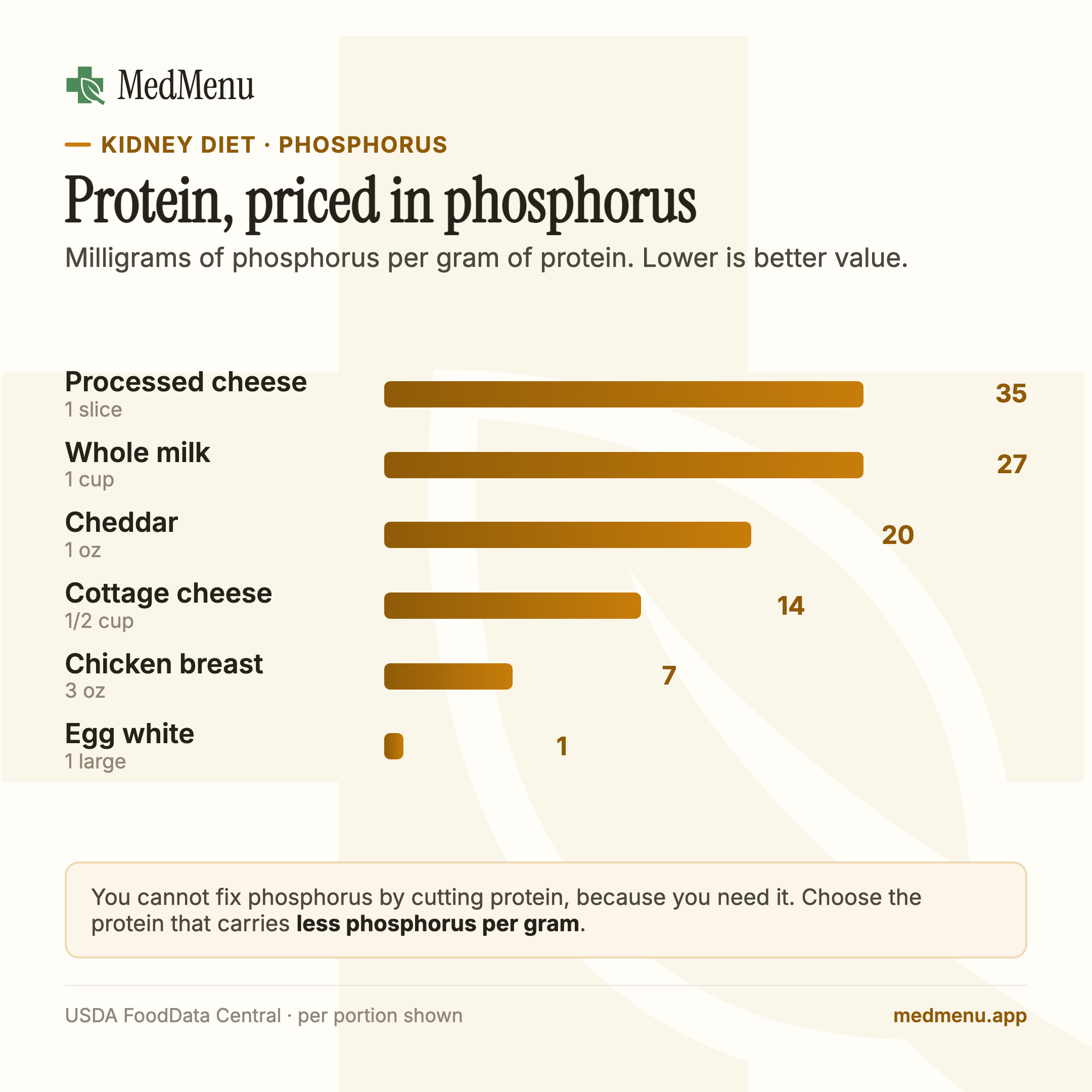
Fruit, non-starchy vegetables and refined grains are nearly all low in phosphorus, so the easy part of this list writes itself. The hard part is protein, because you need it and it is where the phosphorus lives. The way through is choosing protein that carries less phosphorus per gram, not eating less protein: egg white brings about 1.4 mg for every gram of protein, cheddar about 20, processed cheese about 35.
By the MedMenu Editorial Team · Published July 21, 2026
Milligrams of phosphorus in a normal serving:
Renal diets commonly work around 1,000 mg of phosphorus a day as a practical reference, which is common practice rather than a published guideline figure, set from your blood tests and your stage. Not everyone with kidney disease is asked to limit it.
Fruit, non-starchy vegetables and refined grains, with potassium alongside so you can see both minerals at once.
| Food | Serving | Phos. mg | Potas. mg |
|---|---|---|---|
| Egg white | 1 large white | 5 | 54 |
| Cranberries | 1/2 cup | 6 | 44 |
| Pineapple | 1/2 cup | 7 | 90 |
| Eggplant, boiled | 1/2 cup, cubes | 8 | 62 |
| Blueberries | 1/2 cup | 9 | 57 |
| Green bell pepper | 1/2 cup, sliced | 9 | 80 |
| Cucumber | 1/2 cup, sliced | 12 | 76 |
| Green beans | 1/2 cup, cooked | 20 | 99 |
| Cauliflower | 1/2 cup, cooked | 20 | 88 |
| Strawberries | 1/2 cup | 20 | 127 |
| Apple | 1 medium | 20 | 195 |
| Carrots, boiled | 1/2 cup, sliced | 23 | 183 |
| White bread | 1 slice | 24 | 32 |
| Cabbage | 1/2 cup, cooked | 25 | 147 |
| White rice | 1/2 cup, cooked | 34 | 28 |
| Pasta | 1/2 cup, cooked | 41 | 31 |
The refined grains are worth a note: white rice and pasta are low in both minerals, which is why renal cooking leans on them. They are also fast carbohydrate, covered in the diabetic kidney disease diet guide and, for rice specifically, in the full rice breakdown.
By comparing protein foods on the ratio rather than on the raw milligrams. Protein and phosphorus travel together, so the useful question is how much phosphorus arrives with each gram of protein you need. Renal dietitians work with exactly this number.
| Protein food | Serving | Phos. mg | Prot. g | mg per g prot. |
|---|---|---|---|---|
| Egg white | 1 large white | 5 | 4 | 1.4 |
| Chicken breast | 3 oz, roasted | 194 | 26 | 7 |
| Tofu, firm | 1/2 cup | 239 | 22 | 11 |
| White beans | 1/2 cup, cooked | 102 | 9 | 12 |
| Egg | 1 large | 86 | 6 | 14 |
| Cottage cheese, 2% | 1/2 cup | 170 | 12 | 14 |
| Black beans | 1/2 cup, cooked | 120 | 8 | 16 |
| Mozzarella string cheese | 1 stick, 1 oz | 130 | 7 | 19 |
| Cheddar cheese | 1 oz | 127 | 6 | 20 |
| Lentils | 1/2 cup, cooked | 178 | 9 | 20 |
| Whole milk | 1 cup | 205 | 8 | 27 |
| Processed American cheese | 1 slice, 1 oz | 179 | 5 | 35 |
Read the last column. Egg white sits alone at the bottom, which is why it appears in renal recipes far more often than anywhere else in cooking. Chicken breast is the best of the everyday meats; our chicken guide compares its cuts and the processed forms worth skipping. Processed cheese sits at the top not because it is more nutritious but because phosphate was added to it, and that added phosphate is absorbed almost completely, covered in high phosphorus foods.
One caution on the plant rows: lentils and beans look middling to poor on this ratio, but a good share of their phosphorus is bound as phytate, which humans absorb poorly, so they tend to perform better in practice than the column suggests. The ratio is a tool for ranking similar foods, not a verdict.
Because manufacturers are not required to print it. The nutrition panel can be silent on phosphorus while the food carries a substantial added dose, so a low-phosphorus list has to be built from foods you can identify rather than from packages you can check. When a package is involved, the ingredient list is where to look: anything containing PHOS is added phosphate, which is absorbed far more completely than the phosphorus bound in whole food.
The protein column is where the two diets agree completely. Protein does not raise blood glucose, so choosing egg white and measured poultry serves the kidney number without touching the sugar one, and protein on the plate slows the whole meal down.
The disagreement is in the first table. White rice, pasta and white bread are the low-phosphorus staples and also the fast carbohydrate. A portion of about half a cup, or the lower-glycemic version of the same low-mineral grain, keeps both numbers in range; that trade-off is the whole subject of the diabetic kidney disease diet guide.
Phosphorus, potassium and protein values are from USDA FoodData Central (Standard Reference legacy) for the servings shown, using USDA's own measure weights. The phosphorus-to-protein ratio is computed per 100 g so that serving size does not distort it, then shown alongside the per-serving figures. Because added phosphate is not required on the nutrition panel and varies by brand, the ingredient list on the package in front of you is the final word. Renal diets commonly work around 1,000 mg of phosphorus a day as a practical reference, which is common practice rather than a published guideline figure, set from your blood tests and stage.
Sources
MedMenu is an information tool, not medical advice, and does not diagnose, treat, or manage any condition. Your nephrologist and renal dietitian set your personal targets, including how much protein is right for you, from your labs and stage. Published July 21, 2026 · Last updated July 21, 2026.
This is a comprehensive website! Recipes look great and represent a variety of cuisines. You have emphasized the appropriate nutrients. Guidance tips are helpful. Science tab provides evidence-based references and are appropriate for the diseases addressed. Links to Drugs.com, WebMD & Medline are nice. As a registered dietitian, I feel comfortable recommending MedMenu.
Susan G. Rodder, MS, RDN, LD
Registered Dietitian
MedMenu offers all the data you need to plan meals based on specific dietary needs. There are lot of great recipes from a variety of cuisines to choose from, or you can test your own recipe to see how well it fits into your dietary guidelines.
Valerie B.
MedMenu user
Diabetically Speaking with SmartMove360
Most fruit and non-starchy vegetables, and refined grains. Per serving: cranberries 6 mg, pineapple 7 mg, boiled eggplant 8 mg, blueberries 9 mg, green bell pepper 9 mg, cucumber 12 mg, green beans 20 mg, cauliflower 20 mg, white rice 34 mg a half cup and pasta 41 mg. Egg white is the standout protein at 5 mg.
It is the milligrams of phosphorus that come with each gram of protein, and renal dietitians use it because you cannot simply cut protein: you need it. Egg white is about 1.4 mg per gram, chicken breast about 7, cheddar about 20, processed cheese about 35. Choosing a lower ratio gets you the same protein for less phosphorus.
Yes, and it is the reason egg white turns up constantly in renal cooking. One large white is about 5 mg of phosphorus and 54 mg of potassium, with around 4 g of protein. A whole egg is about 86 mg of phosphorus, because nearly all of it sits in the yolk. See the full white, yolk, and whole-egg breakdown.
Manufacturers are not required to declare it, so the panel usually shows nothing even when a food carries added phosphate. That is why a low-phosphorus list has to be built from whole foods you can identify, and why the ingredient list matters: anything containing PHOS is added phosphate, which is absorbed almost completely.
In portions, and the type matters more than most lists admit. An ounce of cheddar is about 127 mg of phosphorus at a ratio of roughly 20 mg per gram of protein; a slice of processed American is 179 mg at about 35, because phosphate salts are added to make it melt. Natural cheese in a measured portion is the better trade. See the full natural-vs-processed breakdown, sodium included.
Rather not count?
A printable week with the protein portions already chosen, and phosphorus, potassium and sodium counted for every meal.
See the meal plan →