Foods to avoid with kidney disease / Chicken
Yes, and it is one of the workhorse proteins of a renal diet. A 3 oz roast breast carries about 218 mg potassium, 194 mg phosphorus and 63 mg sodium, numbers that fit an ordinary day comfortably. Two things deserve more attention than the minerals: what the label says, since broth-injected and deli chicken carry far more sodium than the bird itself, and how much protein your CKD stage allows, because that cap arrives before the potassium one does.
By the MedMenu Editorial Team · Published August 11, 2026
Five forms of chicken, 3 oz each time. The first three are the bird as it comes; the last two left the store with extra ingredients already inside. Per USDA FoodData Central:
| Portion (3 oz) | Potassium | Phosphorus | Sodium | Protein |
|---|---|---|---|---|
| Chicken breast | 218 mg | 194 mg | 63 mg | 26 g |
| Chicken thigh | 229 mg | 196 mg | 90 mg | 21 g |
| Chicken thigh with skin | 215 mg | 184 mg | 87 mg | 20 g |
| Chicken thigh with added solution | 228 mg | 172 mg | 150 mg | 21 g |
| Deli chicken breast | 306 mg | 218 mg | 877 mg | 15 g |
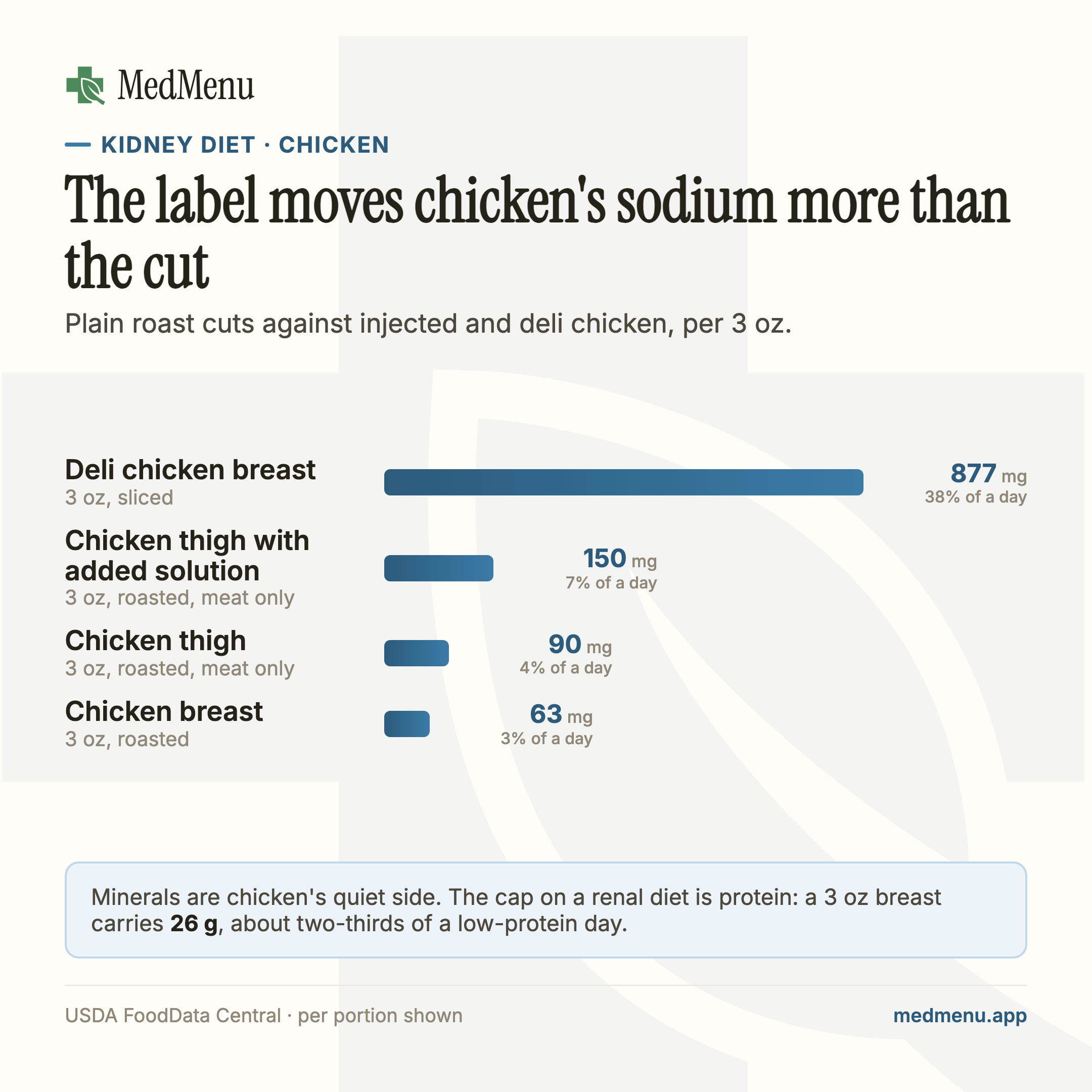
Breast and thigh sit within a few percent of each other on every mineral, and skin shifts calories rather than minerals. The two processed rows drift upward on sodium: half again as much for the broth-injected thigh, and close to 14 times as much for deli slices.
The practical read: choose the cut you like. Breast gives the most protein per ounce, thigh gives more flavor for slightly more sodium, and either fits a renal day. The decision that moves your numbers happens at the meat counter label, before the kitchen.
Kidneys filter the by-products of protein metabolism, so most renal diets set a daily protein target alongside the mineral ones, and chicken is dense in exactly that. (One of those by-products, creatinine, is the same lab marker that creatine supplements push around.) The 2020 update of the professional nutrition guideline for kidney disease recommends, for metabolically stable adults with CKD stages 3 to 5 who do not have diabetes and are under close clinical supervision, a low-protein diet of 0.55 to 0.60 g per kg of body weight a day. Where diabetes is also present, it suggests a higher 0.6 to 0.8 g per kg instead (Ikizler and colleagues, 2020).
Worked through for a 70 kg (154 lb) person on the lower range, that is roughly 39 to 42 g of protein for the whole day. One 3 oz breast carries 26 g, about two-thirds of it, before eggs, bread, or anything else contributes. The same portion of thigh carries 21 g and buys a little more room.
Chicken breast also happens to be one of the better phosphorus trades in the protein aisle, at about 7 mg of phosphorus per gram of protein; the full ranking is on our low-phosphorus foods list.
Much of the raw chicken sold in supermarkets is injected with a salt-and-broth solution before packaging, which is what the phrase "with added solution" or "enhanced" on the label means. The USDA entries above put that difference at 150 mg sodium per 3 oz against 90 mg for the same untreated cut. Deli and rotisserie-seasoned chicken goes further: brining, seasoning and slicing bring 3 oz to about 877 mg of sodium, more than a third of a 2,300 mg day, along with the highest potassium of any row in the table at 306 mg.
The fix costs nothing at the register. Packages labeled without additives, often marked "air-chilled" or simply listing chicken as the sole ingredient, carry the bird's own 63 to 90 mg per serving, and a home-roasted breast sliced for sandwiches does the deli's job at a fraction of its sodium. The same label habit that helps here also spots added phosphate, which our phosphorus guide covers in detail.
Plain chicken carries no carbohydrate, so it leaves blood sugar alone and pairs well with the starch portions a diabetes plan already counts. Two details are worth knowing when both conditions are in play:
For meals that balance the protein cap against blood sugar automatically, the diabetic kidney disease diet guide walks the combined targets through a full day.
Every figure comes from USDA FoodData Central (Standard Reference legacy) for the exact preparation named: roasted breast meat, roasted thigh meat with and without skin, roasted thigh with added solution, and prepackaged rotisserie-seasoned deli breast, each scaled to 3 oz (85 g). For scale, many kidney diets use around 2,000 mg potassium and 1,000 mg phosphorus a day as common reference points, and kidney guidelines put sodium under 2,300 mg a day. Protein ranges are quoted from the 2020 nutrition guideline's recommendation statements with their scope. There is no single target that fits everyone; your care team sets yours from your labs and stage.
Sources
MedMenu is an information tool, not medical advice, and does not diagnose, treat, or manage any condition. Your nephrologist and renal dietitian set your personal targets from your labs and stage. Published August 11, 2026 · Last updated August 11, 2026.
This is a comprehensive website! Recipes look great and represent a variety of cuisines. You have emphasized the appropriate nutrients. Guidance tips are helpful. Science tab provides evidence-based references and are appropriate for the diseases addressed. Links to Drugs.com, WebMD & Medline are nice. As a registered dietitian, I feel comfortable recommending MedMenu.
Susan G. Rodder, MS, RDN, LD
Registered Dietitian
MedMenu offers all the data you need to plan meals based on specific dietary needs. There are lot of great recipes from a variety of cuisines to choose from, or you can test your own recipe to see how well it fits into your dietary guidelines.
Valerie B.
MedMenu user
Diabetically Speaking with SmartMove360
The limit is usually protein rather than potassium. A 3 oz roast breast carries 26 g protein, which for a 70 kg (154 lb) person on the guideline low-protein range of 0.55 to 0.60 g per kg a day, roughly 39 to 42 g, is about two-thirds of the whole day. That range applies to metabolically stable adults with CKD stages 3 to 5 who do not have diabetes and are under close clinical supervision; with diabetes the suggested range is higher, 0.6 to 0.8 g per kg. Your care team sets your personal target.
Yes, by a wide margin on sodium. Three ounces of sliced deli chicken breast carries about 877 mg sodium against 63 mg for the same weight of plain roast breast, close to 14 times as much and more than a third of a 2,300 mg day. Its potassium also runs above any plain cut, at about 306 mg per 3 oz, consistent with the brine used in processing.
It helps calories more than minerals. A 3 oz roasted thigh with skin runs about 197 calories against 152 for the same weight without, while potassium, phosphorus and sodium stay within a few milligrams of each other. Take the skin off for heart and weight reasons if your care team advises it; the kidney numbers barely move either way.
Rather not count?
A printable week with the protein, potassium, phosphorus and sodium worked out for every meal, so the portions are handled for you.
See the meal plan →