Foods to avoid with kidney disease / Coconut water
The answer splits on one question: how well your kidneys clear potassium. Coconut water is the highest-potassium drink on the ordinary shelf, about 600 mg per cup fresh and 396 mg packaged, more than orange juice and half again a banana. Working kidneys shrug that off, and the electrolytes are the product working as advertised. With reduced kidney function the same cup is a fruit serving dressed as water, and published hospital cases show what a heavy habit can do when it lands on top of slowed clearance and the wrong medicines.
By the MedMenu Editorial Team · Published August 11, 2026
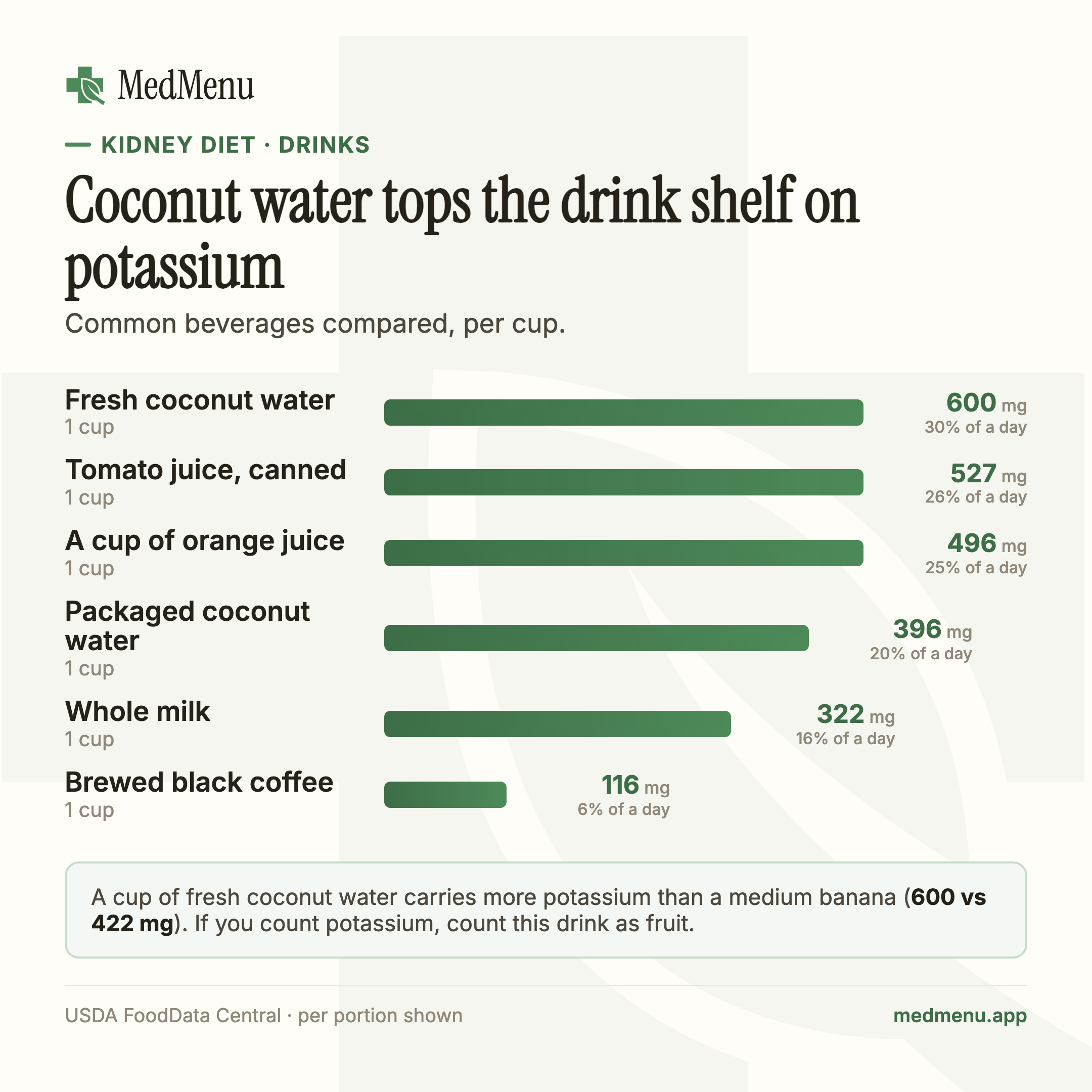
The two coconut waters against the rest of the drink shelf, per cup. Per USDA FoodData Central:
| Portion (1 cup) | Potassium | Sodium | Carbohydrate |
|---|---|---|---|
| Fresh coconut water | 600 mg | 252 mg | 9 g |
| Packaged coconut water | 396 mg | 62 mg | 10 g |
| A cup of orange juice | 496 mg | 2 mg | 26 g |
| Whole milk | 322 mg | 105 mg | 12 g |
| Brewed black coffee | 116 mg | 5 mg | 0 g |
Fresh coconut water leads the shelf on potassium and, less famously, carries a real 252 mg of sodium. A medium banana is 422 mg of potassium, so the fresh cup out-carries the fruit that potassium is famous for.
The packaged and fresh versions differ because packaged products are typically diluted blends of coconut waters; the unsweetened carton above still lands at 396 mg, a fifth of the 2,000 mg reference many kidney diets use, in something that pours like water.
When potassium leaves the blood slower than the glass refills. The published cases make the pattern concrete. A 2012 hospital case report in the British Journal of Hospital Medicine documented hyperkalaemia attributed to coconut water (Rees and colleagues, 2012). In a fuller 2018 case, a 78-year-old man with kidney failure and diabetes, taking two blood pressure medicines that hold potassium back, spent a week drinking king coconut water heavily; his serum potassium reached 7.02 mEq/L and he developed ascending paralysis, recovering fully within 24 hours of emergency treatment (Hemachandra and colleagues, 2018).
The lesson in that second case is the combination. Each factor alone, reduced clearance, potassium-sparing medicines, a high-potassium drink, is manageable; stacked together they turned a health drink into an emergency. Coconut water was the one factor the patient could see on a shelf.
For working kidneys, none of this applies with force: the electrolytes are genuine, the unsweetened kind carries about 10 g of carbohydrate per cup, and it is a reasonable exercise drink. The split answer is the honest one.
Unsweetened coconut water is one of the lighter drinks on carbohydrate, about 10 g per cup against orange juice's 26 g, so on the blood sugar axis it beats juice comfortably. Three cautions keep it honest:
How juices concentrate a fruit's load into a fast glass is worked through in can you eat oranges with kidney disease, and the whole-fruit rankings live in the low-potassium fruits guide.
Beverage figures come from USDA FoodData Central (Standard Reference legacy) for the named items: ready-to-drink unsweetened coconut water, coconut water as the liquid from coconuts, orange juice, whole milk, and brewed coffee, each per cup. Case details come from the two cited case reports as published, with nothing added. For scale, many kidney diets use around 2,000 mg potassium a day as a common working reference. There is no single limit that fits everyone; your care team sets yours from your labs and stage.
Sources
MedMenu is an information tool, not medical advice, and does not diagnose, treat, or manage any condition. Your nephrologist and renal dietitian set your personal targets from your labs and stage. Published August 11, 2026 · Last updated August 11, 2026.
This is a comprehensive website! Recipes look great and represent a variety of cuisines. You have emphasized the appropriate nutrients. Guidance tips are helpful. Science tab provides evidence-based references and are appropriate for the diseases addressed. Links to Drugs.com, WebMD & Medline are nice. As a registered dietitian, I feel comfortable recommending MedMenu.
Susan G. Rodder, MS, RDN, LD
Registered Dietitian
MedMenu offers all the data you need to plan meals based on specific dietary needs. There are lot of great recipes from a variety of cuisines to choose from, or you can test your own recipe to see how well it fits into your dietary guidelines.
Valerie B.
MedMenu user
Diabetically Speaking with SmartMove360
Yes, the highest of the ordinary drink shelf. A cup of fresh coconut water carries about 600 mg potassium, more than a medium banana's 422 mg, and a cup of packaged unsweetened coconut water about 396 mg. For comparison per cup: orange juice about 496 mg, whole milk 322 mg, brewed coffee 116 mg, and water zero. Fresh coconut water also carries about 252 mg sodium per cup, which most people would never guess from the marketing.
Treat it as a high-potassium fruit serving rather than as water. When kidney function is reduced, potassium clears slowly, and a habit of reaching for coconut water as everyday hydration stacks 400 to 600 mg per cup onto the day. Published hospital cases describe dangerous potassium levels where heavy coconut water intake combined with reduced clearance and potassium-sparing blood pressure medicines. If you have been told to watch potassium, this drink belongs on the counted list, and your care team sets the budget.
For a healthy person sweating through exercise, coconut water's electrolytes are real and the unsweetened kind carries less sugar than most sports drinks, about 10 g per cup. The same electrolytes are exactly why it stops being a casual choice when kidneys clear potassium poorly; a person with reduced kidney function has the opposite problem a sports drink solves.
Rather not count?
A printable week with the potassium, phosphorus and sodium worked out for every meal and drink, so the portions are handled for you.
See the meal plan →