Kidney diet · Fruit
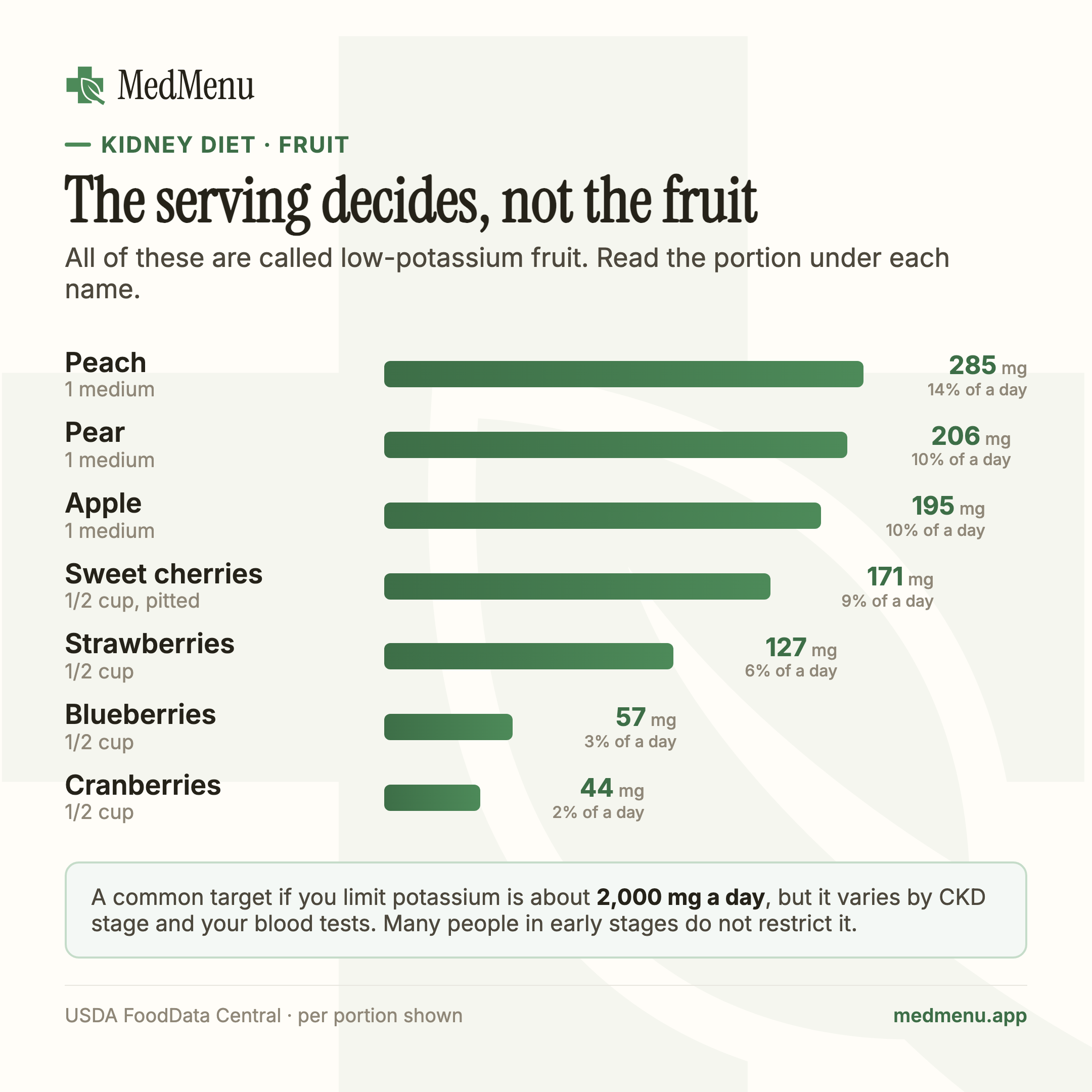
Berries, pineapple, plums, grapes and tangerines are the lowest-potassium fruits, all under about 150 mg a serving. The size of the piece decides as much as the fruit does, a detail most lists leave out. A whole pear runs about 206 mg while half a cup of cherries is 171 mg, and cherries hold nearly twice the potassium per bite. You are choosing how much lands on the plate, not between good fruit and bad fruit.
By the MedMenu Editorial Team · Published July 21, 2026
Milligrams of potassium in a normal serving of each:
For scale, a common working reference is about 2,000 mg of potassium a day, though it varies by kidney stage and blood test results, and many people in early stages are not asked to limit potassium at all. Half a cup of blueberries is roughly 3% of that.
Because a fruit list ranks by concentration, and your blood responds to the amount you actually eat. Those are two different things, and for fruit they often disagree. Cherries hold about 222 mg of potassium per 100 g and pears about 116 mg, so by the usual ranking a pear looks like the calmer choice. Then you eat one medium pear, which weighs 178 g, next to half a cup of cherries, which weighs 77 g, and the pear delivers more.
| Fruit | Per 100 g | Usual serving | Per serving |
|---|---|---|---|
| Cherries | 222 mg | 1/2 cup, 77 g | 171 mg |
| Pear | 116 mg | 1 medium, 178 g | 206 mg |
| Peach | 190 mg | 1 medium, 150 g | 285 mg |
| Raspberries | 151 mg | 1/2 cup, 62 g | 94 mg |
This is good news. It means the fruits you were told to skip are mostly a portion question. Half a pear is about 103 mg. Half a peach is about 143 mg. Everything stays in the kitchen, just cut smaller and counted.
Ranked by a realistic serving, lowest first. The carbohydrate column is there because so many people reading a kidney list are also watching blood sugar.
| Fruit | Serving | Potassium mg | Carbs g |
|---|---|---|---|
| Cranberries | 1/2 cup | 44 | 7 |
| Blueberries | 1/2 cup | 57 | 11 |
| Pineapple | 1/2 cup | 90 | 11 |
| Raspberries | 1/2 cup | 94 | 7 |
| Plum | 1 medium | 104 | 8 |
| Blackberries | 1/2 cup | 117 | 7 |
| Strawberries | 1/2 cup | 127 | 6 |
| Mango | 1/2 cup | 138 | 12 |
| Grapes | 1/2 cup | 145 | 14 |
| Tangerine | 1 medium | 146 | 12 |
| Watermelon | 1 cup, diced | 170 | 11 |
| Cherries | 1/2 cup | 171 | 12 |
| Apricots, fresh | 2 apricots | 181 | 8 |
| Honeydew | 1/2 cup, diced | 194 | 8 |
| Apple | 1 medium | 195 | 25 |
| Pear | 1 medium | 206 | 27 |
| Cantaloupe | 1/2 cup, diced | 214 | 7 |
| Kiwifruit | 1 medium | 215 | 10 |
| Orange | 1 medium | 237 | 15 |
| Peach | 1 medium | 285 | 14 |
| Banana | 1 medium | 422 | 27 |
Nothing on this list is off limits. The ones at the bottom are the ones to portion and count, and a banana is the clearest example of that.
The water leaves and the potassium stays, so the same fruit changes sides. This is why dried fruit shows up on every kidney warning list while its fresh version sits on the friendly one:
Look at the second column and then at the portions. A quarter cup of raisins is a small handful that disappears in a minute. Half a cup of grapes is a proper bowl of fruit and still lower. Fresh gives you more food, more water and more of the feeling of having eaten something.
Juice works differently, and it is worth being precise. Squeezing fruit does not concentrate the potassium much: apple juice holds about 101 mg per 100 g against 107 mg for a whole apple. Behaviourally, a glass goes down in seconds, and without the fibre you would have chewed through, it takes several oranges to fill a glass and none of them fill you (the orange-versus-juice numbers make the gap concrete). Whole fruit is the better habit, and breakfast is where juice does most of its damage. The drink aisle's biggest surprise is coconut water, which out-carries every juice here per cup.
Fruit is where the two sets of advice can pull apart, so it helps to read both columns of the table above at once. Berries win on both counts: half a cup of raspberries is 94 mg of potassium and 7 g of carbohydrate, strawberries 127 mg and 6 g, blackberries 117 mg and 7 g. Berries are low in potassium, low in sugar and high in fibre, the rare case where both columns agree completely.
Two places the columns disagree. A pear is a moderate potassium choice at 206 mg but carries 27 g of carbohydrate, the same as a banana, so with diabetes the half-pear portion is doing double work. Cantaloupe is the reverse: 214 mg of potassium for only 7 g of carbohydrate, so it reads worse on the kidney column than on the sugar one.
Dried fruit is the one place both columns agree loudly. A quarter cup of raisins is 268 mg of potassium and 29 g of carbohydrate, more carbohydrate than a whole banana, in a handful you barely notice eating. Most kidney diet advice stops at the first number; if you are managing both, the second one matters just as much, and the diabetic kidney disease diet guide takes the conflict food by food.
Potassium and carbohydrate values come from USDA FoodData Central (Standard Reference legacy), for raw fruit at the gram weights shown in the serving column, which is why a "medium" fruit is written with its weight. Serving weights are USDA's own measure weights for one medium fruit or a half cup. The daily figure used for scale is the roughly 2,000 mg a day many renal diets work from; it is a reference, not a personal limit. How much potassium you should have, if you need to limit it at all, is set by your kidney stage and your blood test results, which your care team tracks.
Sources
MedMenu is an information tool, not medical advice, and does not diagnose, treat, or manage any condition. Your nephrologist and renal dietitian set your personal targets from your labs and stage. Published July 21, 2026 · Last updated July 21, 2026.
This is a comprehensive website! Recipes look great and represent a variety of cuisines. You have emphasized the appropriate nutrients. Guidance tips are helpful. Science tab provides evidence-based references and are appropriate for the diseases addressed. Links to Drugs.com, WebMD & Medline are nice. As a registered dietitian, I feel comfortable recommending MedMenu.
Susan G. Rodder, MS, RDN, LD
Registered Dietitian
MedMenu offers all the data you need to plan meals based on specific dietary needs. There are lot of great recipes from a variety of cuisines to choose from, or you can test your own recipe to see how well it fits into your dietary guidelines.
Valerie B.
MedMenu user
Diabetically Speaking with SmartMove360
Per half cup, cranberries at about 44 mg, blueberries at 57 mg, pineapple at 90 mg, raspberries at 94 mg and blackberries at 117 mg. A medium plum is about 104 mg. Berries and pineapple are the reliable everyday choices.
By weight yes, about 116 mg per 100 g. But a whole medium pear weighs 178 g, so it lands near 206 mg. Half a pear is about 103 mg. The fruit is fine; the size of the piece is what makes the number.
Yes. Drying removes water and concentrates what is left. One fresh plum is about 104 mg, five prunes about 307 mg. Half a cup of grapes is about 145 mg, a quarter cup of raisins about 268 mg. Fresh fruit gives you much more food for the same potassium.
There is no single answer. Potassium targets vary by kidney stage and blood test results, and many people in early stages are not asked to limit potassium at all. Against the roughly 2,000 mg a day many renal diets work from, two or three servings of lower-potassium fruit fit comfortably. Your care team sets your number.
Rather not count?
A printable week with the fruit portions already worked out, and potassium, sodium and phosphorus counted for every meal.
See the meal plan →