Foods to avoid with kidney disease / Mango
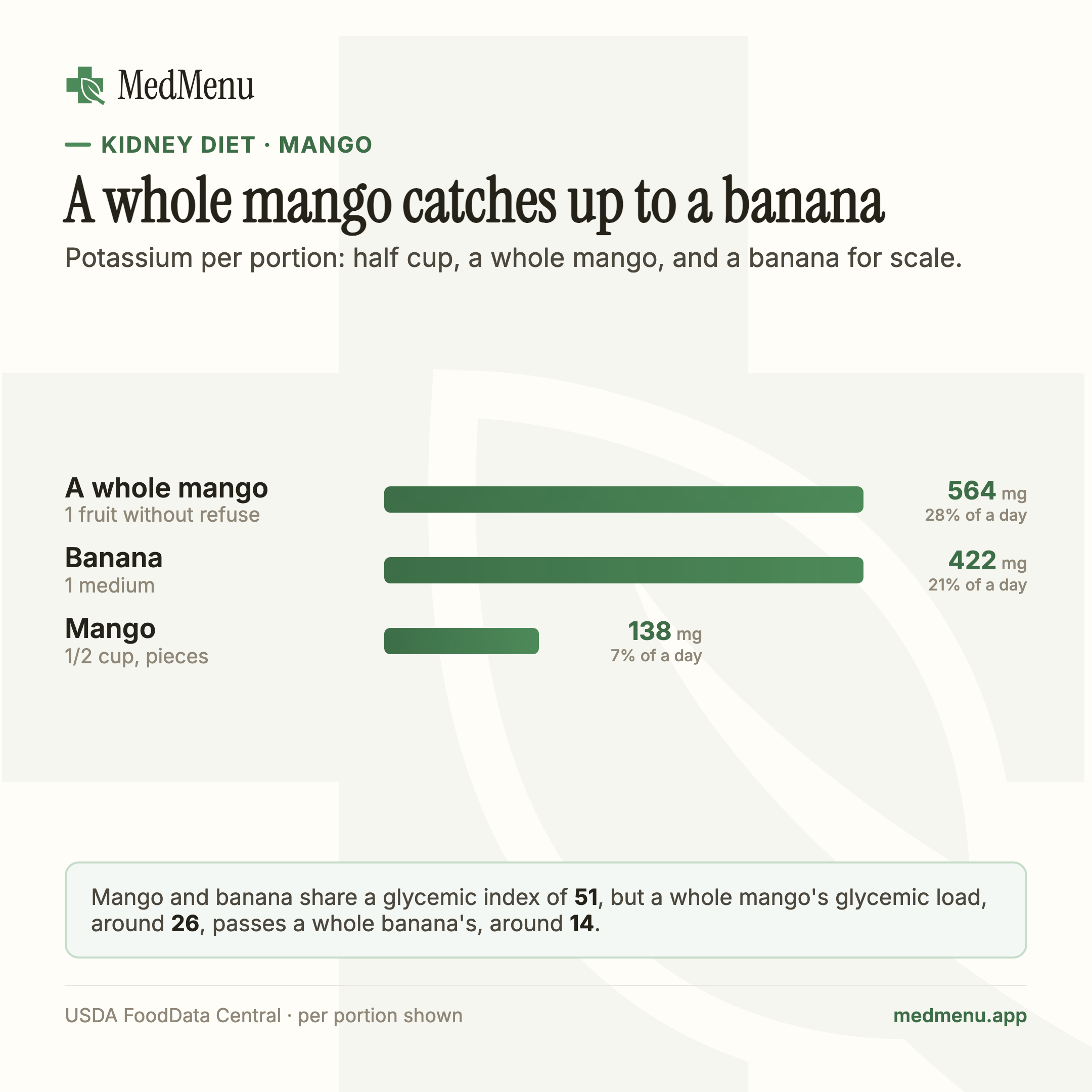
In a real portion, yes, but the portion is doing all the work. A half cup of mango, the USDA reference size, is about 138 mg potassium, well under a banana's 422 mg. A whole mango is a different fruit by the numbers: USDA lists one whole fruit's edible flesh at 336 g, more than four times a half cup, and at that size potassium climbs to 564 mg, more than a banana. Mango and a ripe banana also share an identical glycemic index, 51, but their glycemic loads diverge sharply once a real portion is counted, which is where diabetes becomes the bigger factor here.
By the MedMenu Editorial Team · Published August 13, 2026
Two real portions against the two fruits most kidney guides use as a yardstick. Per USDA FoodData Central:
| Portion | Potassium | Phosphorus | Carbohydrate |
|---|---|---|---|
| Mango, 1/2 cup, pieces (82 g) | 138 mg | 11 mg | 12 g |
| A whole mango, 1 fruit without refuse (336 g) | 564 mg | 47 mg | 50 g |
| Banana, 1 medium (118 g) | 422 mg | 26 mg | 27 g |
| Orange, 1 medium (131 g) | 237 mg | 18 mg | 15 g |
The half cup is the USDA reference portion, smaller than how mango usually reaches a plate. USDA's own listing for one whole fruit's edible flesh runs 336 g, over four times that cup, which is why the same fruit shows up twice with very different numbers.
Mango's glycemic index is 51, medium, and identical to a ripe banana's own score (Atkinson, Foster-Powell and Brand-Miller, 2008). By that number alone, the two fruits read the same.
The glycemic LOAD, which multiplies the index by the carbohydrate in the actual portion, is where they split. A half cup of mango carries about 12 g of carbohydrate, for a load around 6, inside the range most scales call low. A whole mango carries closer to 50 g, for a load around 26, in the high band. A whole banana's load lands in between, around 14, because a banana's usual portion sits much closer to its own reference size.
Half a mango, measured, keeps the load closer to the banana's own range while still leaving a real serving of fruit.
Mango is one of the few Batch B foods where the kidney numbers are not the binding constraint. A whole mango's 564 mg potassium is a real figure to count against a daily budget, but it sits in range with other single-serving fruits already on this site. The number that changes the picture is glycemic load:
Our diabetic kidney disease diet guide works through more foods where the two conditions' numbers point in different directions.
Potassium, phosphorus and carbohydrate come from USDA FoodData Central (Standard Reference legacy) for raw mango, banana and orange, at the portions shown; the whole-mango weight comes from USDA's own household-portion listing for the same food. Glycemic index and load figures come from the published tables in Atkinson et al., 2008. For scale, many kidney diets use around 2,000 mg potassium and 1,000 mg phosphorus a day as common working references; your own numbers come from your labs and stage, set with your care team.
Sources
MedMenu is an information tool, not medical advice, and does not diagnose, treat, or manage any condition. Your nephrologist and renal dietitian set your personal targets from your labs and stage. Published August 13, 2026 · Last updated August 13, 2026.
This is a comprehensive website! Recipes look great and represent a variety of cuisines. You have emphasized the appropriate nutrients. Guidance tips are helpful. Science tab provides evidence-based references and are appropriate for the diseases addressed. Links to Drugs.com, WebMD & Medline are nice. As a registered dietitian, I feel comfortable recommending MedMenu.
Susan G. Rodder, MS, RDN, LD
Registered Dietitian
MedMenu offers all the data you need to plan meals based on specific dietary needs. There are lot of great recipes from a variety of cuisines to choose from, or you can test your own recipe to see how well it fits into your dietary guidelines.
Valerie B.
MedMenu user
Diabetically Speaking with SmartMove360
In a real portion, yes, but count the portion. A half cup of mango, the USDA reference size, carries about 138 mg potassium, well under a banana's 422 mg. A whole mango is a different number: USDA lists a whole fruit's edible flesh at 336 g, more than four times a half cup, and at that size potassium climbs to about 564 mg, higher than a banana. Half a mango is a reasonable middle ground for most kidney diets; a whole one is a portion to measure rather than eat freehand.
Its glycemic index, 51, is medium, identical to a ripe banana's. The glycemic load is where the two fruits split: a half cup of mango carries a load around 6, in the low band, but a whole mango's load runs closer to 26, in the high band, because the real portion carries about 50 g of carbohydrate. A whole banana's load stays lower, around 14, because a banana's own edible portion is closer to its reference size.
Yes. USDA's reference portion for one whole mango, 336 g of edible flesh, carries about 564 mg potassium, above a medium banana's 422 mg. A half cup of mango, by contrast, is only 138 mg. The difference comes from portion size, not the fruit itself: a banana is naturally eaten close to its own reference unit, while a mango's real edible portion runs about four times the reference cup most lists use.
Rather not count?
A printable week with the potassium, phosphorus and sodium worked out for every meal and drink, so the portions are handled for you.
See the meal plan →