Foods to avoid with kidney disease / Bananas
Usually yes, in portion. A medium banana has about 422 mg of potassium, a real chunk of a day's budget, so whether it fits comes down to your blood potassium and how much you eat.
By the MedMenu Editorial Team · Published July 20, 2026
Per USDA FoodData Central, raw banana has about 358 mg of potassium per 100 g. In everyday portions:
| Portion | Potassium | Carbs |
|---|---|---|
| 1 medium (118 g) | 422 mg | 27 g |
| 1/2 medium (59 g) | 211 mg | 14 g |
| 1 small (101 g) | 362 mg | 23 g |
Not everyone with kidney disease does. In earlier stages, many people have normal blood potassium and no restriction at all. Many kidney diets aim for around 2,000 mg of potassium a day as a general guide, but there is no single number that fits everyone; it depends on your blood test results, which your care team tracks. Against that guide, a whole banana is roughly a fifth of the day, which is why portion matters once your labs say to watch it.
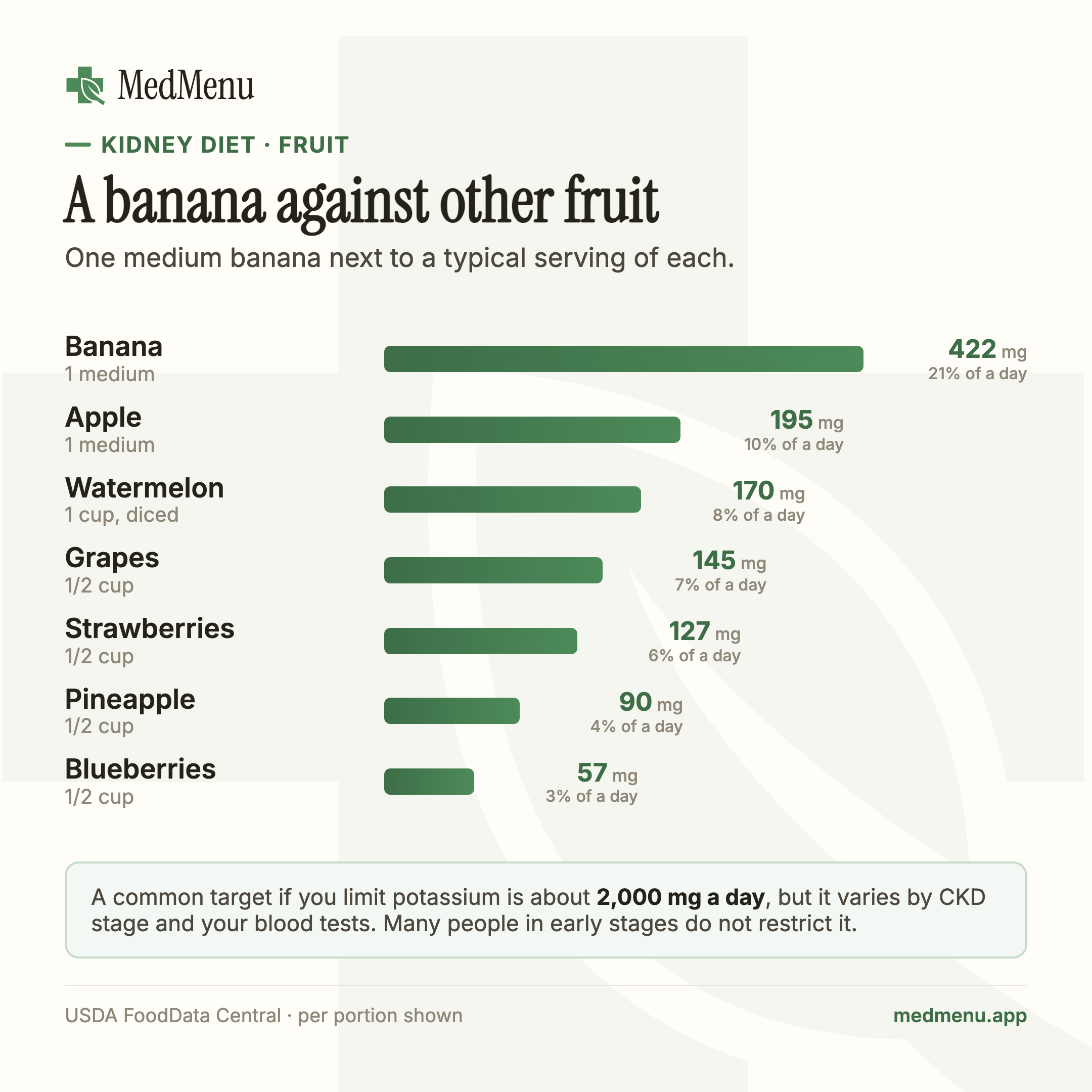
If you want banana and you are watching potassium, half is about 211 mg, which fits most budgets when you count it. For comparison, half a cup of blueberries is only about 57 mg, so a bowl of berries with half a banana still lands lower than one whole banana. Portion and pairing keep bananas on the table.
Generic kidney advice falls short here: a medium banana is about 27 g of carbohydrate and roughly 14 g of sugar, and its glycemic index is moderate, so it can move blood sugar. A riper banana raises it faster. Two practical moves recommended for blood-sugar control (ADA): keep to a smaller portion, and pair it with protein or fat, such as a spoon of peanut butter or a few nuts, so the sugar lands more slowly. A slightly greener banana is also gentler on glucose.
Blueberries, 1/2 cup
About 57 mg potassium, and low glycemic too.
Apple, 1 medium
About 195 mg potassium, with fiber that slows sugar.
See the full low potassium foods list for more low-potassium fruits and everyday foods.
Potassium and carbohydrate figures come from USDA FoodData Central (Standard Reference legacy), for the portions shown. There is no single daily potassium limit that fits everyone, so the 2,000 mg reference above is a common working number clinicians use, not a personal target; your care team sets yours from your labs.
Sources
MedMenu is an information tool, not medical advice, and does not diagnose, treat, or manage any condition. Your nephrologist and renal dietitian set your personal targets from your labs and stage. Published July 20, 2026 · Last updated July 20, 2026.
This is a comprehensive website! Recipes look great and represent a variety of cuisines. You have emphasized the appropriate nutrients. Guidance tips are helpful. Science tab provides evidence-based references and are appropriate for the diseases addressed. Links to Drugs.com, WebMD & Medline are nice. As a registered dietitian, I feel comfortable recommending MedMenu.
Susan G. Rodder, MS, RDN, LD
Registered Dietitian
MedMenu offers all the data you need to plan meals based on specific dietary needs. There are lot of great recipes from a variety of cuisines to choose from, or you can test your own recipe to see how well it fits into your dietary guidelines.
Valerie B.
MedMenu user
Diabetically Speaking with SmartMove360
A medium banana (about 118 g) has roughly 422 mg potassium, per USDA. Half a banana is about 211 mg.
Bananas do not damage healthy kidneys. In CKD the concern is potassium: when kidneys clear it poorly, a whole banana can be a large share of the day. Portion is the lever, and your labs say whether you need one.
Berries and apples are among the lowest. Half a cup of blueberries is about 57 mg potassium and a medium apple about 195 mg, versus 422 mg in a whole banana.
Rather not count?
A printable week with the potassium, phosphorus and sodium worked out for every meal, so the portions are handled for you.
See the meal plan →