Foods to avoid with kidney disease / Potatoes
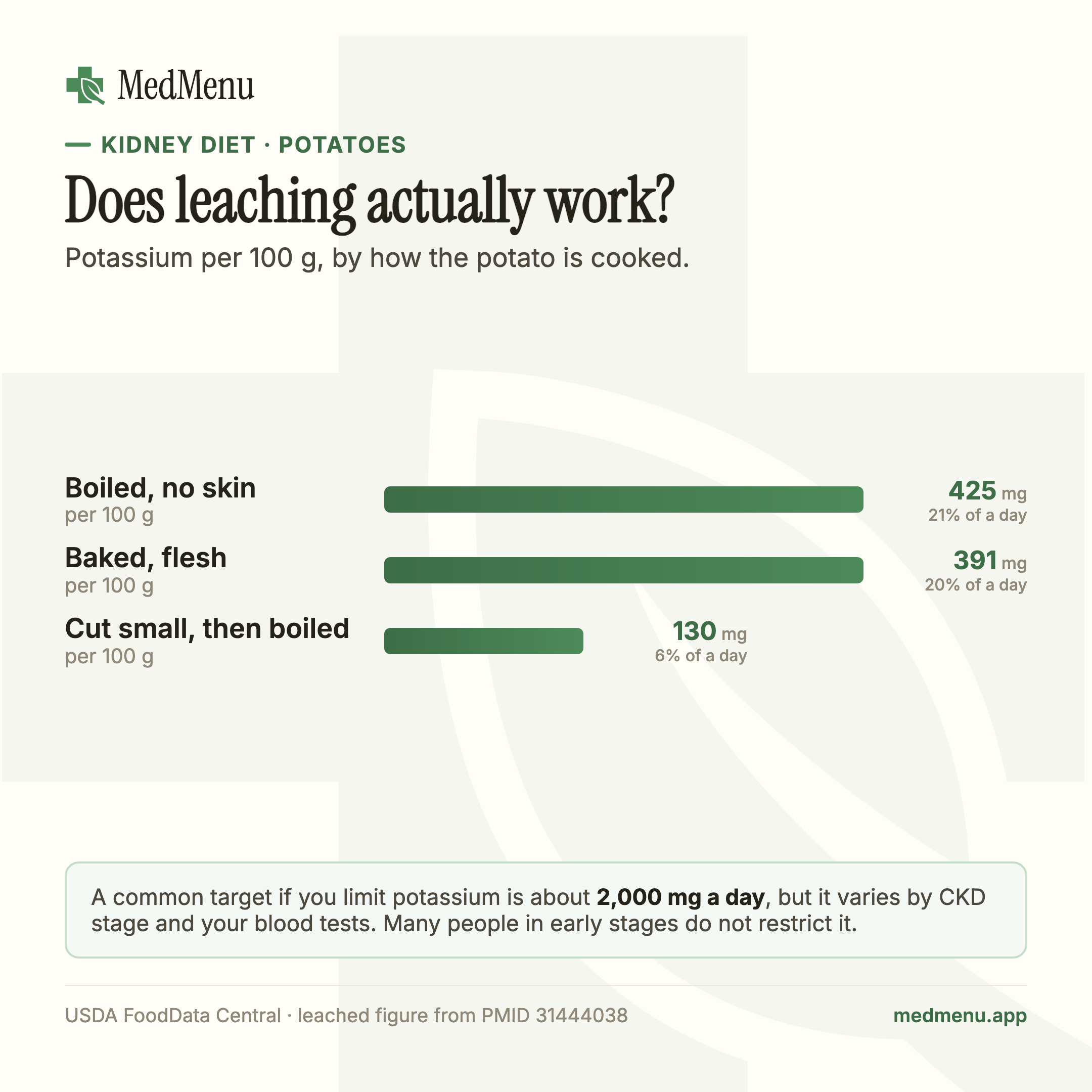
Yes, in portion, and how you cook them matters more than for almost any other food. A baked potato is high in potassium, but cutting potatoes small and boiling them in plenty of water can cut that a lot, per the research below.
By the MedMenu Editorial Team · Published July 20, 2026
Potassium concentrates in the flesh and the skin. Per USDA FoodData Central:
| Preparation | Potassium |
|---|---|
| Baked, flesh only, 1 medium (~156 g) | ~610 mg |
| Baked, flesh, 1/2 medium | ~305 mg |
| Boiled without skin, per 100 g | ~425 mg |
| Cut small + boiled or cooked-then-soaked | as low as ~130 mg / 100 g* |
*Per Martinez-Pineda et al., Journal of Renal Nutrition, 2020 (see Sources).
You will read that "soaking potatoes removes potassium." The research is more specific, and it matters. Potassium is water-soluble, so it leaves the potato only where water can reach it. That means surface area and water volume are what count, not soaking on its own.
Soaking a whole raw potato, or ordinary boiling in the skin, does very little, which is the common mistake.
Diabetes is the most common cause of kidney disease, and single-condition advice usually misses this: leaching removes potassium, not carbohydrate. A potato is roughly 20 g of carbohydrate per 100 g of flesh and sits high on the glycemic index, so a leached potato is easier on your kidneys but still raises blood sugar. If you are managing both:
Sweet potatoes are often assumed to be the kidney-friendly choice, but half a cup of baked sweet potato is about 475 mg potassium, in the same range as white potato. Sweet potato has a lower glycemic index, which helps with blood sugar, but for potassium the deciding factor is still portion and preparation, not the color. The full gram-for-gram comparison, including phosphorus, is in can you eat sweet potatoes with kidney disease.
Baseline potassium, phosphorus and carbohydrate come from USDA FoodData Central (Standard Reference legacy). The leaching reduction is from peer-reviewed research, not our own estimate. For scale, many kidney diets aim for around 2,000 mg potassium a day as a common reference, so a whole baked potato is roughly a third of a day. There is no single limit that fits everyone; your care team sets yours from your blood test results.
Sources
MedMenu is an information tool, not medical advice, and does not diagnose, treat, or manage any condition. Your nephrologist and renal dietitian set your personal targets from your labs and stage. Published July 20, 2026 · Last updated July 20, 2026.
This is a comprehensive website! Recipes look great and represent a variety of cuisines. You have emphasized the appropriate nutrients. Guidance tips are helpful. Science tab provides evidence-based references and are appropriate for the diseases addressed. Links to Drugs.com, WebMD & Medline are nice. As a registered dietitian, I feel comfortable recommending MedMenu.
Susan G. Rodder, MS, RDN, LD
Registered Dietitian
MedMenu offers all the data you need to plan meals based on specific dietary needs. There are lot of great recipes from a variety of cuisines to choose from, or you can test your own recipe to see how well it fits into your dietary guidelines.
Valerie B.
MedMenu user
Diabetically Speaking with SmartMove360
Soaking alone does little. The reduction comes from cutting potatoes small and boiling them in plenty of fresh water, or cooking then soaking. One Journal of Renal Nutrition study leached up to 70% of the potassium that way.
The flesh of one medium baked potato is about 610 mg potassium, and more with the skin. Half a medium potato is about 305 mg.
Leaching lowers potassium but not carbohydrate, and potatoes are high on the glycemic index, so they still raise blood sugar. Keep the portion small, choose boiled over baked, cool them for resistant starch, and pair with protein.
Rather not count?
A printable week with the potassium, phosphorus and sodium worked out for every meal, so the portions are handled for you.
See the meal plan →