Kidney diet · Potassium
No food removes potassium that is already in your blood, which is a medical matter. What you can do with food is lower how much potassium you take in, and three things genuinely work, covered below with the numbers.
By the MedMenu Editorial Team · Published July 20, 2026
Not directly. If a blood test shows high potassium (hyperkalemia), that can be serious, and it is treated by your care team, sometimes with medication, not by a quick food fix. Diet works on prevention: it controls how much potassium you take in day to day, so your level is easier to keep in range. So the real, useful question is what lowers your intake. Three levers do that.
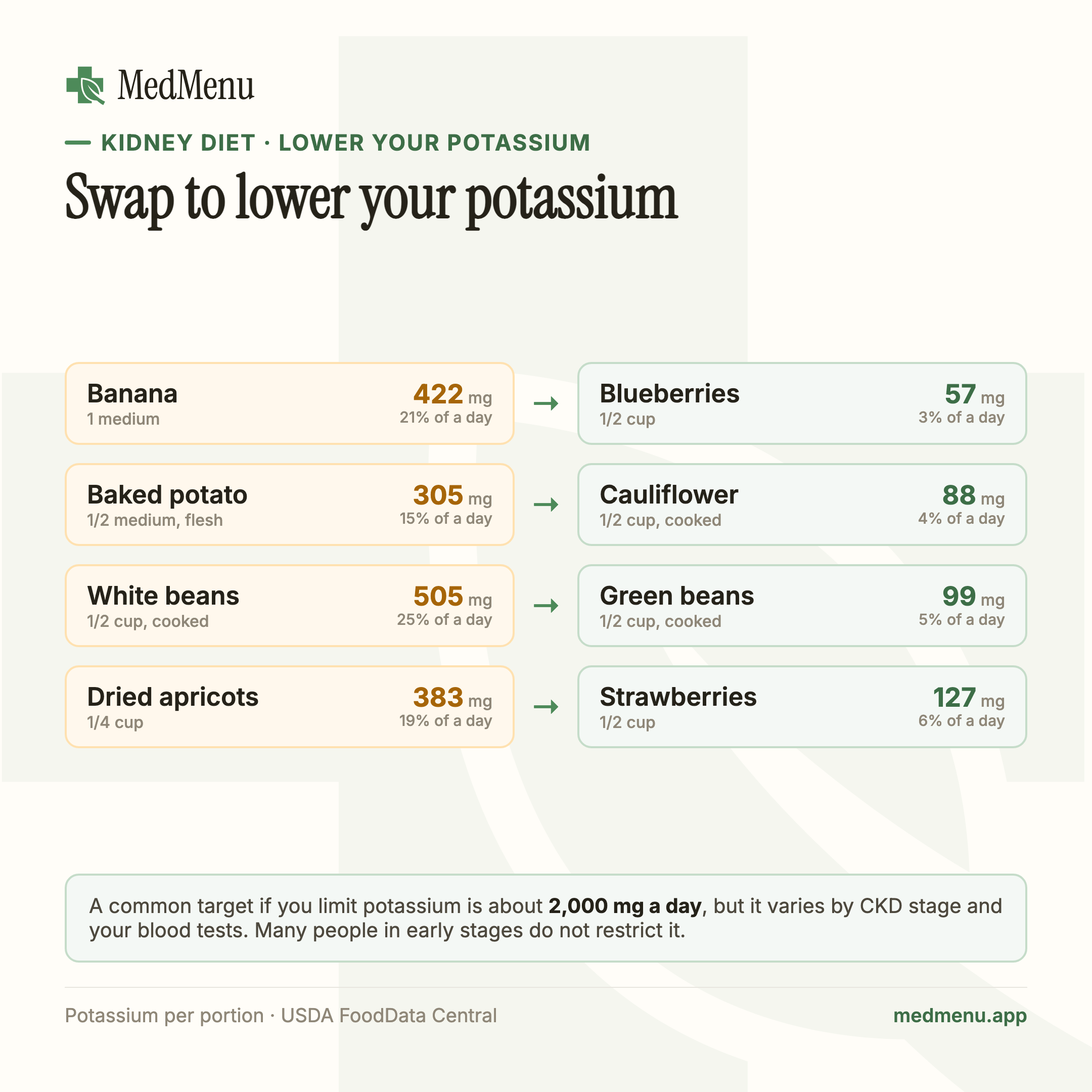
The biggest lever is simply choosing the lower-potassium option in the same category. The drops are large:
| Instead of | Potassium | Choose | Potassium |
|---|---|---|---|
| Banana | 422 mg | Blueberries, 1/2 cup | 57 mg |
| Baked potato, 1/2 | 305 mg | Cauliflower, 1/2 cup | 88 mg |
| White beans, 1/2 cup | 505 mg | Green beans, 1/2 cup | 99 mg |
| Dried apricots, 1/4 cup | 383 mg | Strawberries, 1/2 cup | 127 mg |
See the full low potassium foods list for more options by group, or the fruit list ranked by serving for why the dried-to-fresh swap in that last row works so well.
Potassium is water-soluble, so you can pull some of it out of high-potassium vegetables like potatoes. The method that works is cutting them into small pieces and boiling them in a large volume of fresh water, or cooking then soaking; soaking a whole raw potato does very little. Done well, this can lower potato potassium substantially. The full method and the research behind it are in our guide to potatoes and kidney disease. It works better on some vegetables than others, and on a few it does nothing at all: see which vegetables boiling actually helps.
Some of the most concentrated potassium is not on any fruit-and-vegetable list, starting with salt substitutes:
Salt substitutes are usually potassium chloride. They swap sodium for potassium, and on a kidney diet that can push blood potassium to dangerous levels. Check the label for "potassium chloride" and talk to your care team before using one. The same goes for many "no-salt" seasoning blends and some low-sodium processed foods.
Your care team may also mention staying regular, because the bowel clears some potassium, especially in later-stage CKD. That is general practice guidance, not a substitute for their advice.
Good news on the overlap: the lower-potassium swaps above are also mostly friendly to blood sugar. Blueberries, strawberries, cauliflower and green beans are low potassium and low glycemic, so they lower one number without raising the other. The swap to watch is the classic renal move of "just use white rice," which is low potassium but high glycemic; keep that portion small and pair it with protein, or use parboiled rice, which lands at a glycemic index of 38 instead of 73. If you are managing both conditions, the diabetic kidney disease diet guide works through every food where the two sets of advice collide.
Potassium values are from USDA FoodData Central (Standard Reference legacy), for the portions shown. For scale, many kidney diets aim for around 2,000 mg potassium a day as a common reference, so a whole banana is about a fifth of a day. There is no single limit that fits everyone; how much you need to limit is set from your blood test results, which your care team tracks.
Sources
MedMenu is an information tool, not medical advice, and does not diagnose, treat, or manage any condition. High blood potassium is a medical situation; contact your care team. Your nephrologist and renal dietitian set your personal targets. Published July 20, 2026 · Last updated July 20, 2026.
This is a comprehensive website! Recipes look great and represent a variety of cuisines. You have emphasized the appropriate nutrients. Guidance tips are helpful. Science tab provides evidence-based references and are appropriate for the diseases addressed. Links to Drugs.com, WebMD & Medline are nice. As a registered dietitian, I feel comfortable recommending MedMenu.
Susan G. Rodder, MS, RDN, LD
Registered Dietitian
MedMenu offers all the data you need to plan meals based on specific dietary needs. There are lot of great recipes from a variety of cuisines to choose from, or you can test your own recipe to see how well it fits into your dietary guidelines.
Valerie B.
MedMenu user
Diabetically Speaking with SmartMove360
No. Water does not meaningfully lower blood potassium. If your level is high, that is a medical situation your care team manages; diet controls how much you take in, not what is already in your blood.
There is no do-it-yourself way to quickly drop blood potassium at home; high potassium is treated by a clinician. Through diet you lower intake over time by swapping to low-potassium foods and leaching high-potassium vegetables.
Be careful. Most replace sodium with potassium chloride, which can raise blood potassium to dangerous levels on a kidney diet. Check the label and ask your care team first. Herbs, spices, citrus and vinegar add flavor without either mineral.
Rather not count?
A printable week built from lower-potassium foods, with the potassium, phosphorus and sodium worked out for every meal.
See the meal plan →