Foods to avoid with kidney disease / Nuts
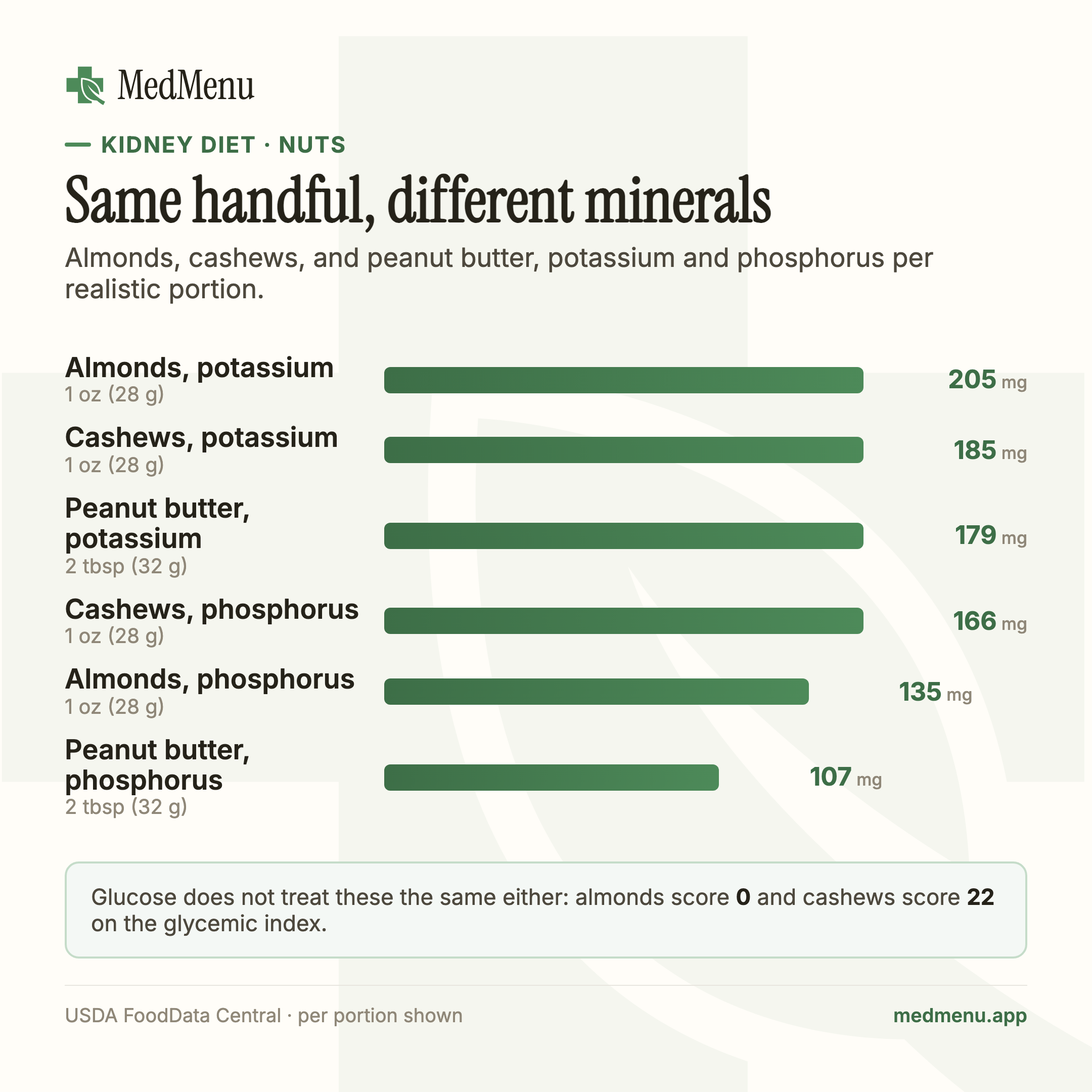
Yes, by the ounce, and "nuts" is not one food once you look closely. An ounce of almonds carries about 205 mg potassium and 135 mg phosphorus. Cashews land close on potassium but carry more phosphorus, and score meaningfully higher on the glycemic index, 22 against almonds' 0. The portion decides the minerals, while which nut you reach for decides the glucose response.
By the MedMenu Editorial Team · Published August 10, 2026
Nuts are one of the few kidney-diet foods portioned by the ounce rather than the cup. Per USDA FoodData Central:
| Portion | Potassium | Phosphorus | Carb |
|---|---|---|---|
| Almonds, 1 oz (28 g) | 205 mg | 135 mg | 6 g |
| Cashews, 1 oz (28 g) | 185 mg | 166 mg | 8 g |
| Peanut butter, 2 tbsp (32 g) | 179 mg | 107 mg | 7 g |
Gram for gram, cashews carry more phosphorus than almonds (593 mg against 481 mg per 100 g) while running lower on potassium (660 mg against 733 mg). Peanut butter, spread rather than eaten whole, runs 558 mg potassium and 335 mg phosphorus per 100 g. These figures assume unsalted nuts and peanut butter without added salt; roasted and salted versions add sodium on top of these totals.
General nutrition advice treats nuts as one food, good for blood sugar, a smart swap for chips. That is not precise enough for a kidney diet, or even for the glucose question on its own. Almonds score 0 on the standard glycemic index, negligible. Cashews score 22, a real number, still low next to bread or rice but not the same as zero. Peanut butter is made from peanuts, which score 7, so it sits much closer to almonds than to cashews on the glucose side (Atkinson and colleagues, 2008).
This is why a renal dietitian will name the specific nut and the ounce, rather than clearing "nuts" as a category.
Nuts are one of the few kidney-diet foods with direct trial evidence behind them for a different condition. A large randomized trial put a Mediterranean diet supplemented with about an ounce of mixed nuts a day against a reduced-fat control diet in more than 7,000 adults at high cardiovascular risk who did not yet have cardiovascular disease. Over the trial, the nuts group had fewer heart attacks, strokes, and cardiovascular deaths than the control group, a hazard ratio of 0.72, close in size to the olive-oil arm of the same trial (Estruch and colleagues, 2018).
If you are managing both conditions, nuts earn their place on the heart-health side of the ledger. The portion is still what decides the mineral side.
Potassium, phosphorus, and carbohydrate come from USDA FoodData Central (Standard Reference legacy): almonds, cashew nuts raw, and peanut butter smooth style without salt. Glycemic index figures are cross-checked against published tables (see Sources). For scale, many kidney diets use around 2,000 mg potassium and 1,000 mg phosphorus a day as common reference points, so an ounce of any of these nuts is under a fifth of either on its own. There is no single potassium or phosphorus limit that fits everyone; your care team sets yours from your blood test results and CKD stage. Kidney nutrition guidelines put sodium under 2,300 mg a day for most adults; the full 2020 guideline is linked below.
Sources
MedMenu is an information tool, not medical advice, and does not diagnose, treat, or manage any condition. Your nephrologist and renal dietitian set your personal targets from your labs and stage. Published August 10, 2026 · Last updated August 10, 2026.
This is a comprehensive website! Recipes look great and represent a variety of cuisines. You have emphasized the appropriate nutrients. Guidance tips are helpful. Science tab provides evidence-based references and are appropriate for the diseases addressed. Links to Drugs.com, WebMD & Medline are nice. As a registered dietitian, I feel comfortable recommending MedMenu.
Susan G. Rodder, MS, RDN, LD
Registered Dietitian
MedMenu offers all the data you need to plan meals based on specific dietary needs. There are lot of great recipes from a variety of cuisines to choose from, or you can test your own recipe to see how well it fits into your dietary guidelines.
Valerie B.
MedMenu user
Diabetically Speaking with SmartMove360
Both, in a real but portioned amount. An ounce of almonds carries about 205 mg potassium and 135 mg phosphorus; cashews run close on potassium (185 mg) and higher on phosphorus (166 mg). Neither number is small, which is why nuts get portioned by the ounce rather than eaten straight from the bag.
No. Almonds score 0 on the glycemic index, essentially negligible, while cashews score 22, a real number even though it is still low next to bread or rice. Cashews carry more carbohydrate gram for gram than almonds or peanuts, so a snack list that just says nuts is treating three different foods as one.
An ounce, about a small handful of whole nuts or two tablespoons of peanut butter, is the portion these numbers describe. There is no single limit that fits everyone; your care team sets yours from your labs and stage.
Rather not count?
A printable week with the potassium, phosphorus and sodium worked out for every meal, so the portions are handled for you.
See the meal plan →