Kidney diet · Sodium and potassium
The overlap is fresh, unsalted food: sodium comes mostly from processing, not the salt shaker, so a food can be low in potassium and still be a salt bomb. Cook from fresh and both minerals stay low, covered below with the winners, the traps, and the numbers.
By the MedMenu Editorial Team · Published July 20, 2026
Fresh and unsalted is the theme. Each of these is low in both minerals:
Milligrams per typical portion. K = potassium, Na = sodium.
Because most of it is added before the food reaches you. Only a small share of daily sodium comes from the shaker; the rest is baked, canned, and cured into processed food. That is why a low-potassium food can still be a sodium problem: cheese, bread, and canned goods are all low in potassium but carry salt. Kidney guidelines generally suggest keeping sodium under 2,300 mg a day, and one processed meal can use most of it.
These pass the potassium test but fail on sodium. They are the ones to watch.
| Food | Portion | Potassium | Sodium |
|---|---|---|---|
| Canned chicken noodle soup | 1 cup | 59 mg | 831 mg |
| Sliced ham | 3 oz | 244 mg | 692 mg |
| Bagel | 1/2 | 56 mg | 219 mg |
| Cheddar cheese | 1 oz | 21 mg | 183 mg |
| White bread | 1 slice | 32 mg | 122 mg |
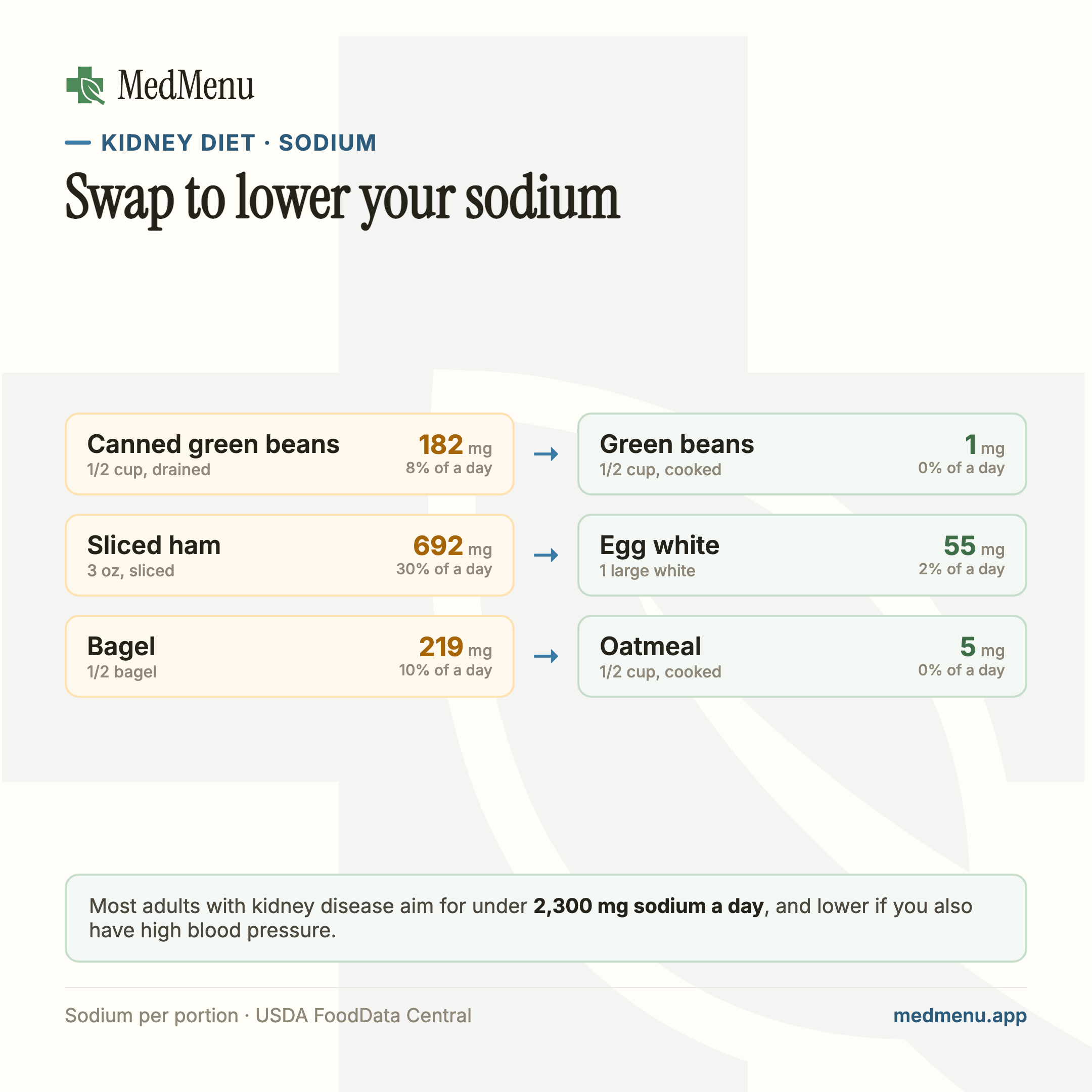
Half a cup of fresh green beans, cooked without salt, has about 1 mg sodium. The same half cup from a can has about 182 mg, the same vegetable after one step of processing. Draining and rinsing canned vegetables removes some of the salt, but fresh or frozen without salt is lower still. When a recipe calls for canned, reach for no-salt-added, or use frozen. One caution in the other direction: some reduced-sodium packaged foods replace the salt with potassium, covered in low potassium snacks. And once the packaged food is handled, the seasoning shelf is the other half of the day: see low sodium kidney diet foods.
One habit helps everything here: sodium drives blood pressure, which matters a lot with both kidney disease and diabetes, and the fresh, unsalted foods that keep sodium and potassium low, berries, vegetables, and lean protein like egg white, are also low on the glycemic index. The salted low-potassium carbs to watch, white bread and bagels, are the same fast carbs that spike blood sugar. Cooking from fresh quietly serves your kidneys, your blood pressure, and your blood sugar at once.
Sodium and potassium values are from USDA FoodData Central (Standard Reference legacy), for the portions shown, using the unsalted version where one exists. Kidney guidelines generally put sodium under 2,300 mg a day; how much you limit is set from your blood test results and blood pressure, which your care team tracks.
Sources
MedMenu is an information tool, not medical advice, and does not diagnose, treat, or manage any condition. Your nephrologist and renal dietitian set your personal targets from your labs and stage. Published July 20, 2026 · Last updated July 20, 2026.
This is a comprehensive website! Recipes look great and represent a variety of cuisines. You have emphasized the appropriate nutrients. Guidance tips are helpful. Science tab provides evidence-based references and are appropriate for the diseases addressed. Links to Drugs.com, WebMD & Medline are nice. As a registered dietitian, I feel comfortable recommending MedMenu.
Susan G. Rodder, MS, RDN, LD
Registered Dietitian
MedMenu offers all the data you need to plan meals based on specific dietary needs. There are lot of great recipes from a variety of cuisines to choose from, or you can test your own recipe to see how well it fits into your dietary guidelines.
Valerie B.
MedMenu user
Diabetically Speaking with SmartMove360
Fresh, unsalted foods: berries, fresh or frozen vegetables like green beans, cauliflower and cucumber, and plain rice or pasta. Sodium comes from processing, so cooking from fresh keeps both low.
It is one of the biggest sodium traps. A cup of prepared canned chicken noodle soup has about 831 mg sodium, more than a third of a day, even though it is low in potassium. Choose no-salt-added versions or make it fresh.
Yes, some. Draining and rinsing cuts a meaningful share of the added sodium. Fresh or frozen without salt is still lower: canned green beans have about 182 mg per half cup versus about 1 mg for fresh cooked without salt.
Rather not count?
A printable week cooked from fresh, with sodium, potassium and phosphorus worked out for every meal.
See the meal plan →