Kidney diet · Sodium
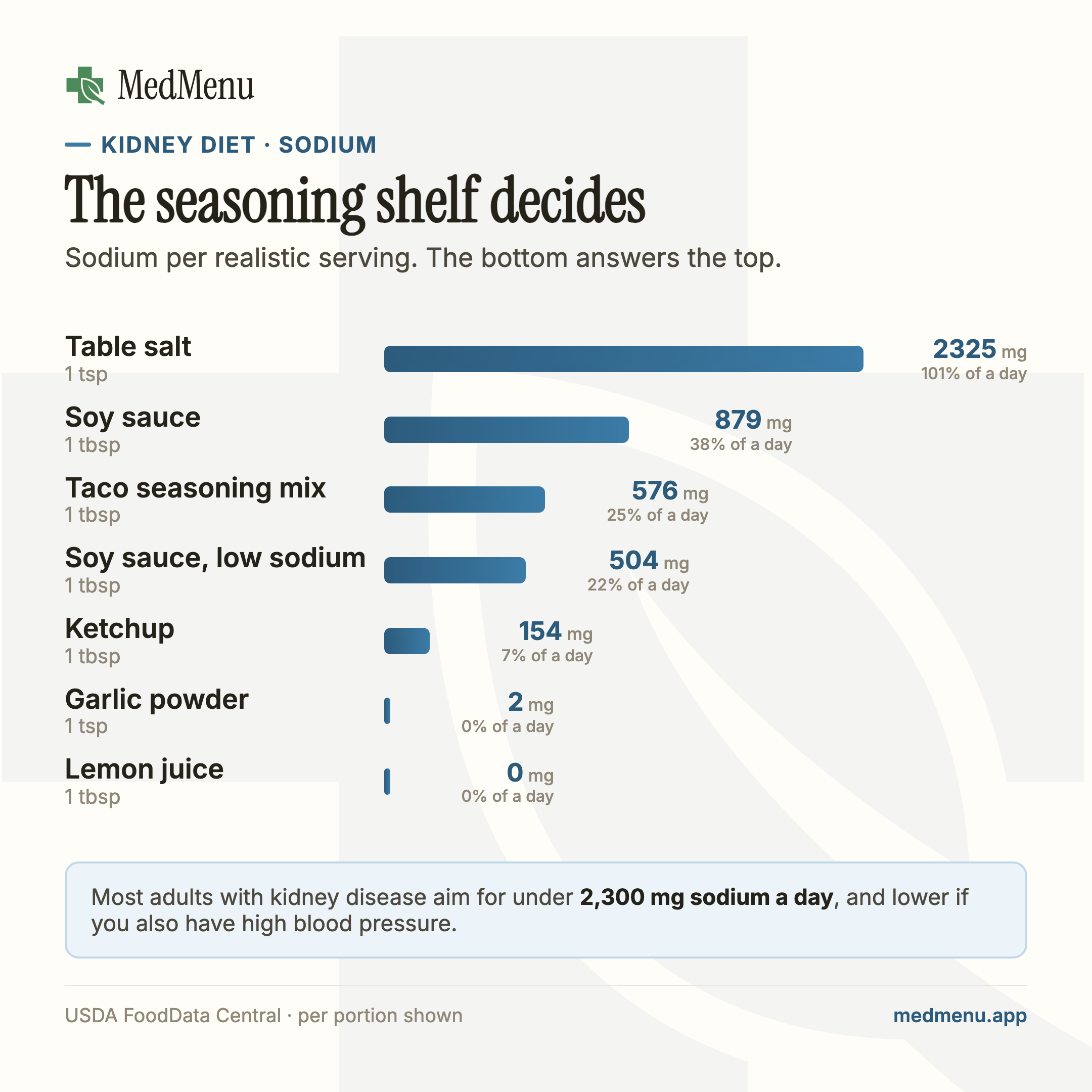
Chicken, rice and green beans have almost no sodium in them. What lands on the plate at the end of cooking is a different matter: one level teaspoon of salt is about 2,325 mg, which is a whole day, and a tablespoon of soy sauce is 879 mg. The good news is that this is the cheapest problem in the kidney diet to fix, because the things that replace salt cost nothing and change no recipe. Garlic powder is 2 mg a teaspoon.
By the MedMenu Editorial Team · Published July 21, 2026
Per realistic serving, highest first. The bottom of this table is the answer to the top of it.
| Condiment or seasoning | Serving | Sodium mg | Potas. mg |
|---|---|---|---|
| Table salt | 1 tsp | 2325 | 0 |
| Soy sauce | 1 tbsp | 879 | 70 |
| Taco seasoning mix | 1 tbsp | 576 | 80 |
| Soy sauce, low sodium | 1 tbsp | 504 | 49 |
| Barbecue sauce | 2 tbsp | 349 | 79 |
| Dill pickle | 1 spear | 283 | 41 |
| Ranch dressing | 2 tbsp | 270 | 19 |
| Salsa | 2 tbsp | 256 | 99 |
| Black olives | 5 large | 162 | 2 |
| Ketchup | 1 tbsp | 154 | 48 |
| Yellow mustard | 1 tsp | 55 | 8 |
| Garlic powder | 1 tsp | 2 | 36 |
| Onion powder | 1 tsp | 2 | 24 |
| Cider vinegar | 1 tbsp | 1 | 11 |
| Lemon juice | 1 tbsp | 0 | 15 |
Potassium is shown because some seasonings are concentrated. A teaspoon of garlic powder is 36 mg of potassium, which is small; the alarming per-100-g figure you may see quoted for spice powders is not the serving anyone eats.
It is lower, not low. Regular soy sauce is about 879 mg a tablespoon. The reduced-sodium version is about 504 mg. That is a real cut, roughly a third, and it still puts about a fifth of a day into one tablespoon.
Treat it as a reason to pour less, not to relax. The same logic applies to every product with "reduced sodium" on the front: the label compares the product to its regular version, not to a low-sodium bar. Check the ingredient list too, since some reduced-sodium products replace the salt with potassium chloride, which matters on a kidney diet for a different reason (covered here).
Salt does three things at the table: it adds its own taste, it sharpens other flavours, and it cuts richness. Acid covers the second and third almost completely, which is why a squeeze of lemon on a finished dish so often removes the urge to reach for the shaker.
The one distinction that catches people: garlic powder and garlic salt are not variations of the same product. Garlic powder is a spice, about 2 mg of sodium a teaspoon, while garlic salt is mostly salt with a little garlic added. The same is true of onion salt, celery salt and most "seasoned" blends: a tablespoon of dry taco seasoning is 576 mg.
For a couple of weeks, honestly, food tastes flatter, then it stops. Taste adapts to lower salt, and foods that once seemed normal start tasting aggressively salty, which is a useful signal rather than a loss.
What helps in the meantime: salt the thing you taste rather than the whole pot (a pinch on top of a finished dish reads as saltier than the same pinch stirred through), keep the shaker off the table so the choice is deliberate, and lean hard on the acid step. Flavour stays here; the trade is a habit, not a cuisine.
This is the section where everything points the same way, which is rare. Lower sodium helps blood pressure directly, and blood pressure is one of the main things that drives kidney disease forward, so the seasoning habit is doing two jobs at once.
Diabetes joins in at the sauce shelf: barbecue sauce and ketchup carry sugar alongside the sodium, and dressings often carry both. Lemon, vinegar and dry spices are free on every one of those counts. For the packaged foods where sodium hides rather than the seasonings you add, see foods low in both sodium and potassium.
Sodium and potassium values are from USDA FoodData Central (Standard Reference legacy) for the servings shown, using USDA's own measure weights, and the regular and reduced-sodium entries are separate USDA foods rather than estimates. Brands vary, sometimes a lot, so the nutrition panel on the bottle in your kitchen beats a category average. Kidney guidelines generally put sodium under 2,300 mg a day for most adults, and lower if you also have high blood pressure; your care team sets yours.
Sources
MedMenu is an information tool, not medical advice, and does not diagnose, treat, or manage any condition. Your nephrologist and renal dietitian set your personal targets from your labs and stage, and salt substitutes in particular are worth asking about before you use one. Published July 21, 2026 · Last updated July 21, 2026.
This is a comprehensive website! Recipes look great and represent a variety of cuisines. You have emphasized the appropriate nutrients. Guidance tips are helpful. Science tab provides evidence-based references and are appropriate for the diseases addressed. Links to Drugs.com, WebMD & Medline are nice. As a registered dietitian, I feel comfortable recommending MedMenu.
Susan G. Rodder, MS, RDN, LD
Registered Dietitian
MedMenu offers all the data you need to plan meals based on specific dietary needs. There are lot of great recipes from a variety of cuisines to choose from, or you can test your own recipe to see how well it fits into your dietary guidelines.
Valerie B.
MedMenu user
Diabetically Speaking with SmartMove360
Anything you cooked yourself from fresh ingredients, seasoned with something other than salt. The building blocks are almost sodium-free: fresh vegetables and fruit, plain rice and pasta, unprocessed meat and fish, and eggs. The sodium usually arrives afterwards, from the shaker, a sauce or a seasoning blend.
About 2,325 mg, which is more than the 2,300 mg a day most adults with kidney disease are advised to stay under. That is one level teaspoon across all cooking and all seasoning for a whole day, which is why the seasoning habit matters more than any single food.
Not really, it is lower. Regular soy sauce is about 879 mg of sodium a tablespoon; the reduced-sodium version is about 504 mg. That is a meaningful cut and still roughly a fifth of a day in one tablespoon, so treat it as a smaller pour rather than a free pass.
Acid and aromatics do most of what salt does. Lemon juice is essentially sodium-free at about 0 mg a tablespoon, cider vinegar about 1 mg, garlic powder about 2 mg a teaspoon and onion powder about 2 mg. The critical distinction is powder versus salt: garlic powder is a spice, garlic salt is mostly salt.
Be careful, and ask your care team first. Most salt substitutes replace sodium with potassium chloride, which can push blood potassium up when the kidneys clear it poorly. The same swap turns up in some reduced-sodium packaged foods, so the ingredient list is worth reading.
Rather not season from scratch?
A printable week seasoned without the salt shaker, with sodium, potassium and phosphorus counted for every meal.
See the meal plan →