Foods to avoid with kidney disease / Spinach
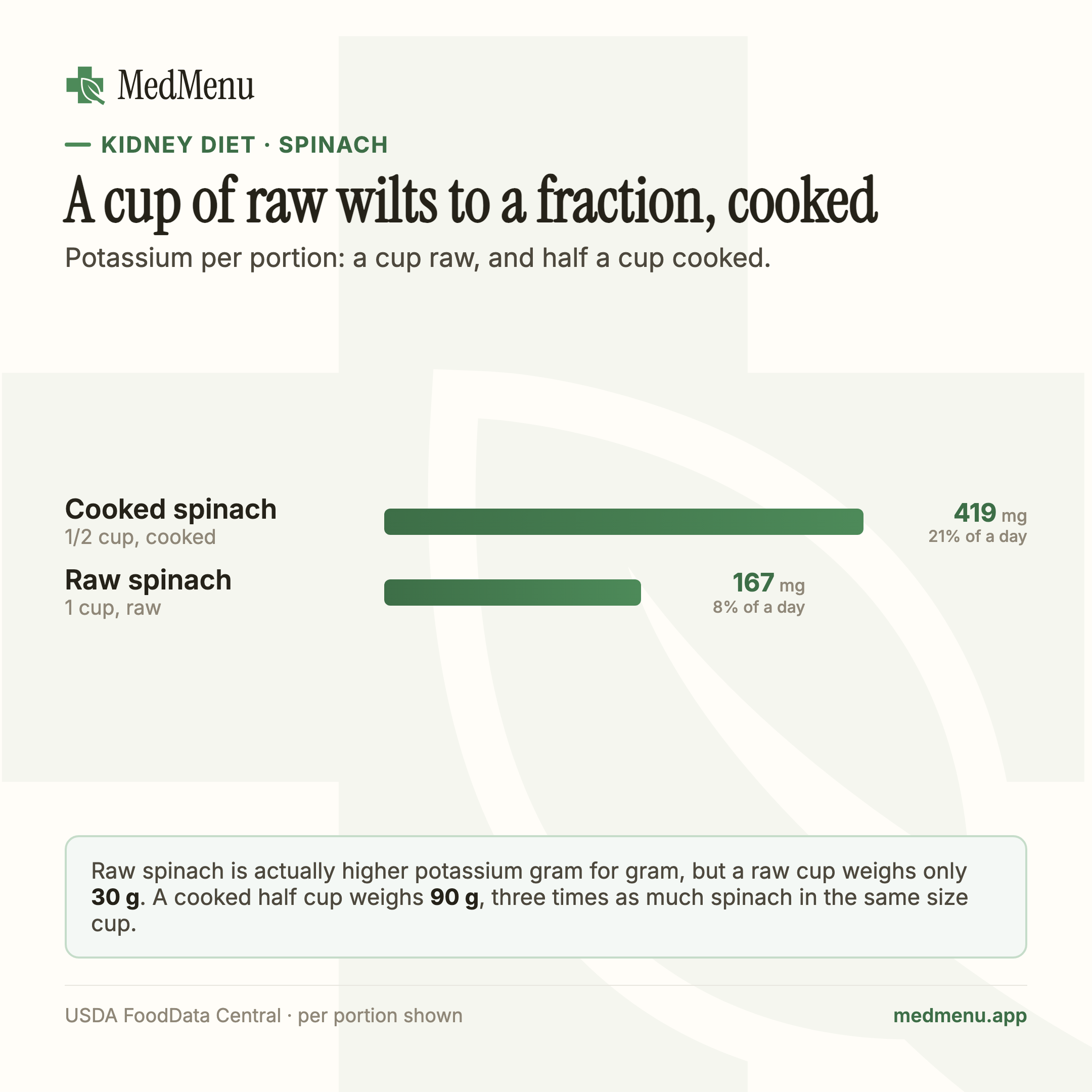
Yes, in portion, and the portion is doing almost all the work. A cup of raw spinach leaves is about 167 mg potassium, a modest number for a full cup. Cooked, a realistic serving, half a cup, is 419 mg, more than double. Cooking itself doesn't add potassium: gram for gram, cooked spinach is about the same as raw, if anything a little lower. A raw cup simply weighs almost nothing, 30 g, and wilts down to a fraction of that once cooked, so a normal cooked portion contains far more actual spinach than a normal raw one.
By the MedMenu Editorial Team · Published August 14, 2026
The same food, two everyday portions. Per USDA FoodData Central:
| Portion | Potassium | Phosphorus | Sodium |
|---|---|---|---|
| Raw spinach, 1 cup (30 g) | 167 mg | 15 mg | 24 mg |
| Cooked spinach, 1/2 cup (90 g) | 419 mg | 50 mg | 63 mg |
Both are common everyday portions, not extremes: a cup of raw leaves for a salad, a half cup of cooked spinach as a side. Neither is unusually high next to other vegetables already covered on this site; a half cup of cooked white beans, for comparison, is 505 mg.
Gram for gram, no. Cooked spinach carries about 466 mg potassium per 100 g; raw spinach carries about 558 mg per 100 g, slightly more. Cooking doesn't add potassium to spinach.
What changes is volume. Raw leaves are mostly water and air, with a lot of empty space between them, so a full cup weighs only 30 g. Once cooked, that structure collapses and the leaves settle together. The same size cup now holds roughly three times as much spinach by weight, which is why a normal cooked serving carries more potassium than a normal raw one, not because cooking concentrates the mineral in the food, but because a cooked cup is simply more spinach.
Measuring a cooked side by the half cup, rather than filling the bowl, keeps the potassium closer to the raw-portion range.
Spinach's carbohydrate is negligible either way, 1 g raw or 3 g cooked, so blood sugar isn't the intersection worth flagging here. Vitamin K is. Spinach is one of the higher vitamin K foods by weight: about 145 mcg in a cup raw, 444 mcg in a cooked half cup, both above the adult Adequate Intake of 90 to 120 mcg a day (NIH Office of Dietary Supplements).
Warfarin and similar anticoagulants work against vitamin K, which is why leafy greens come up so often in conversations about blood thinners. The NIH's own guidance is to keep intake roughly consistent day to day rather than avoid it, and a published study on people taking warfarin backs that up: patients with unstable anticoagulation control ate less vitamin K, and more erratically, than patients with stable control, not more.
Potassium, phosphorus, sodium and carbohydrate come from USDA FoodData Central (Standard Reference legacy) for raw spinach and boiled spinach without added salt, at the portions shown. Vitamin K figures come from the same USDA source. Adult vitamin K Adequate Intake and the consistent-intake guidance come from the NIH Office of Dietary Supplements. For scale, many kidney diets use around 2,000 mg potassium a day as a common working reference; your own numbers come from your labs and stage, set with your care team.
Sources
MedMenu is an information tool, not medical advice, and does not diagnose, treat, or manage any condition. Your nephrologist, cardiologist and renal dietitian set your personal targets from your labs, stage and medications. Published August 14, 2026 · Last updated August 14, 2026.
This is a comprehensive website! Recipes look great and represent a variety of cuisines. You have emphasized the appropriate nutrients. Guidance tips are helpful. Science tab provides evidence-based references and are appropriate for the diseases addressed. Links to Drugs.com, WebMD & Medline are nice. As a registered dietitian, I feel comfortable recommending MedMenu.
Susan G. Rodder, MS, RDN, LD
Registered Dietitian
MedMenu offers all the data you need to plan meals based on specific dietary needs. There are lot of great recipes from a variety of cuisines to choose from, or you can test your own recipe to see how well it fits into your dietary guidelines.
Valerie B.
MedMenu user
Diabetically Speaking with SmartMove360
Yes, in portion. A cup of raw spinach leaves is about 167 mg potassium, a small number. A realistic cooked serving, half a cup, is 419 mg, more than double, because a cup of raw leaves weighs only 30 g and cooks down to a fraction of that, so a normal cooked portion simply contains far more spinach than a normal raw portion. Neither number is unusually high next to other vegetables already on this site; the portion, raw or cooked, is what to count.
Not gram for gram. Cooked spinach carries about 466 mg potassium per 100 g against raw spinach's 558 mg, so cooking does not add potassium, it is if anything a touch lower. What changes is how much spinach fits in a cup. Raw leaves are full of air between them; once wilted, the same size cup holds roughly three times as much spinach by weight, which is why a cooked portion delivers more potassium than a raw one measured the same way.
Spinach is one of the higher vitamin K foods by weight, about 145 mcg in a cup raw and 444 mcg in a cooked half cup, both above the adult daily reference intake (90-120 mcg). Vitamin K is what warfarin works against, but the research points to keeping intake roughly consistent day to day rather than avoiding it: one study found patients with unstable anticoagulation control ate less and more erratic vitamin K than patients with stable control, not more. Anyone on warfarin or a similar medication should talk to whoever manages that prescription before making a large, sudden change in how much spinach or other leafy greens they eat.
Rather not count?
A printable week with the potassium, phosphorus and sodium worked out for every meal and drink, so the portions are handled for you.
See the meal plan →