Foods to avoid with kidney disease / Chocolate
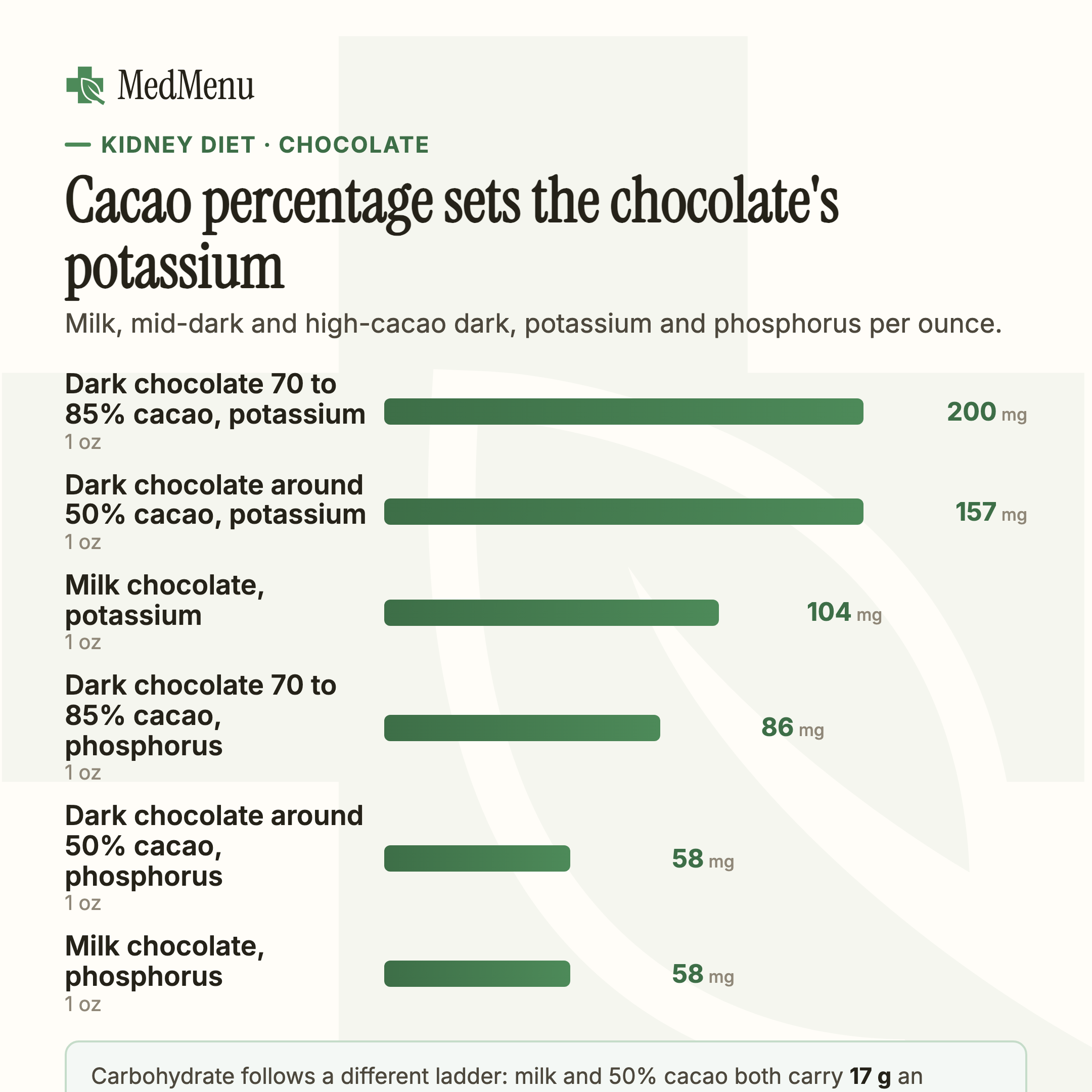
A measured ounce fits most renal days. Milk chocolate carries about 104 mg potassium per ounce, dark around 50% cacao about 157 mg, and high-cacao dark at 70-85% about 200 mg, a tenth of the 2,000 mg reference many kidney diets use. Chocolate earns its place on avoid-lists through per-100-g figures, which describe most of a large bar; the square or two people actually eat is a different quantity. The cacao percentage on the wrapper tells you where the potassium sits.
By the MedMenu Editorial Team · Published August 11, 2026
Three chocolates and plain cocoa, each at the portion a person would actually eat. Per USDA FoodData Central:
| Portion | Potassium | Phosphorus | Carbohydrate |
|---|---|---|---|
| Milk chocolate, 1 oz (28 g) | 104 mg | 58 mg | 17 g |
| Dark chocolate around 50% cacao, 1 oz (28 g) | 157 mg | 58 mg | 17 g |
| Dark chocolate 70 to 85% cacao, 1 oz (28 g) | 200 mg | 86 mg | 13 g |
| Unsweetened cocoa powder, 1 tbsp (5 g) | 76 mg | 37 mg | 3 g |
Potassium climbs with cacao percentage for the same ounce, and phosphorus follows at the top of the ladder. Even the highest row stays around a tenth of a 2,000 mg potassium day.
Portion is doing the quiet work in this table. A single square of a standard bar weighs around a third of an ounce, so the numbers above already describe a generous serving of two to three squares, and a whole 100 g bar would multiply them by three and a half.
Cocoa solids hold the minerals. Cocoa butter, milk and sugar hold close to none, so every step up in cacao percentage swaps mineral-free ingredients for mineral-dense ones. Per 100 g, milk chocolate runs about 372 mg potassium, dark around 50% cacao runs 559 mg, high-cacao dark runs 715 mg, and unsweetened cocoa powder, the pure end of the ladder, reaches about 1,524 mg with 734 mg of phosphorus.
Those per-100-g figures explain chocolate's reputation, and they are the ones most avoid-lists print. They also describe a quantity of high-cacao chocolate almost nobody eats in a sitting. The same arithmetic that makes cocoa powder look alarming puts a tablespoon of it, in a mug of warm milk-substitute or a batch of baking, at 76 mg.
Chocolate-covered snacks answer to different arithmetic: the coating is usually milk chocolate, and the center, nuts, raisins, coffee beans, brings its own minerals. Our nuts guide covers the most common center.
The common advice says switch to dark for blood sugar. The table above shows where that advice actually starts working: an ounce of milk chocolate and an ounce of mid-range dark carry the same 17 g of carbohydrate, so a 50% cacao bar buys extra potassium without saving any sugar. The carbohydrate drop arrives at high cacao percentages, 13 g per ounce at 70 to 85%, and that same ounce carries the ladder's most potassium at 200 mg.
Snacks are where the two conditions collide hardest; the wider trade-offs are mapped in our low-potassium snacks guide and the diabetic kidney disease diet.
Every figure comes from USDA FoodData Central (Standard Reference legacy) for the named item: milk chocolate candies, dark chocolate at 45-59% and at 70-85% cacao solids, and unsweetened dry cocoa powder, scaled to the portion shown. For scale, many kidney diets use around 2,000 mg potassium and 1,000 mg phosphorus a day as common working references. There is no single limit that fits everyone; your care team sets yours from your blood test results and stage.
Sources
MedMenu is an information tool, not medical advice, and does not diagnose, treat, or manage any condition. Your nephrologist and renal dietitian set your personal targets from your labs and stage. Published August 11, 2026 · Last updated August 11, 2026.
This is a comprehensive website! Recipes look great and represent a variety of cuisines. You have emphasized the appropriate nutrients. Guidance tips are helpful. Science tab provides evidence-based references and are appropriate for the diseases addressed. Links to Drugs.com, WebMD & Medline are nice. As a registered dietitian, I feel comfortable recommending MedMenu.
Susan G. Rodder, MS, RDN, LD
Registered Dietitian
MedMenu offers all the data you need to plan meals based on specific dietary needs. There are lot of great recipes from a variety of cuisines to choose from, or you can test your own recipe to see how well it fits into your dietary guidelines.
Valerie B.
MedMenu user
Diabetically Speaking with SmartMove360
Yes, in a measured portion. An ounce of milk chocolate carries about 104 mg potassium, an ounce of dark around 50% cacao about 157 mg, and 70-85% cacao about 200 mg, which is a tenth of the 2,000 mg reference many kidney diets use for a whole day. The lists that flag chocolate as high-potassium quote per-100-g figures, which describe most of a large bar rather than a square or two.
Yes, and the gap follows the cacao percentage. Cocoa solids carry the potassium and phosphorus, while cocoa butter, milk and sugar dilute them. Per identical ounce: milk chocolate about 104 mg potassium and 58 mg phosphorus, dark around 50% cacao about 157 mg and 58 mg, dark at 70-85% about 200 mg and 86 mg. Unsweetened cocoa powder is the concentrated end at about 1,524 mg potassium per 100 g, though a tablespoon holds only about 76 mg.
Check the cacao percentage before assuming dark wins. An ounce of milk chocolate and an ounce of dark around 50% cacao carry the same 17 g of carbohydrate; only high-cacao dark, 70-85%, cuts it to about 13 g, and that same ounce carries the most potassium at about 200 mg. A small portion of either works in most combined plans; your labs decide which number needs the most room.
Rather not count?
A printable week with the potassium, phosphorus and sodium worked out for every meal, treats included, so the portions are handled for you.
See the meal plan →